
Complete Guide to Nostril Piercing
The nostril piercing, located on the side of the nose, is one of the most common and aesthetically versatile piercings. As well as being a fashion accessory, it has a history in many cultures, adding to its symbolic and personal value. Here you will find everything you need to know before getting this piercing, from care to the healing process.
What is Nostril Piercing?
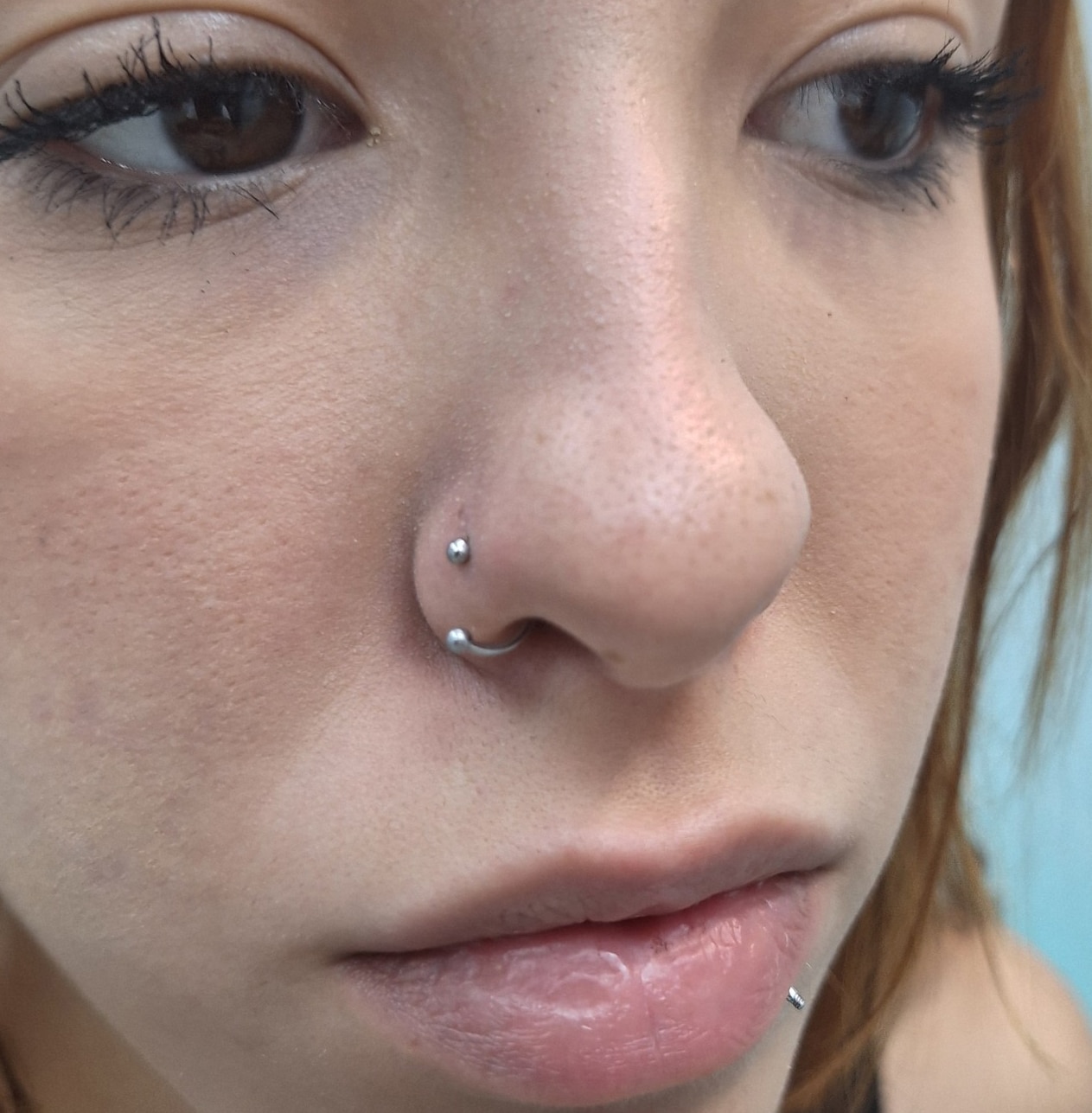
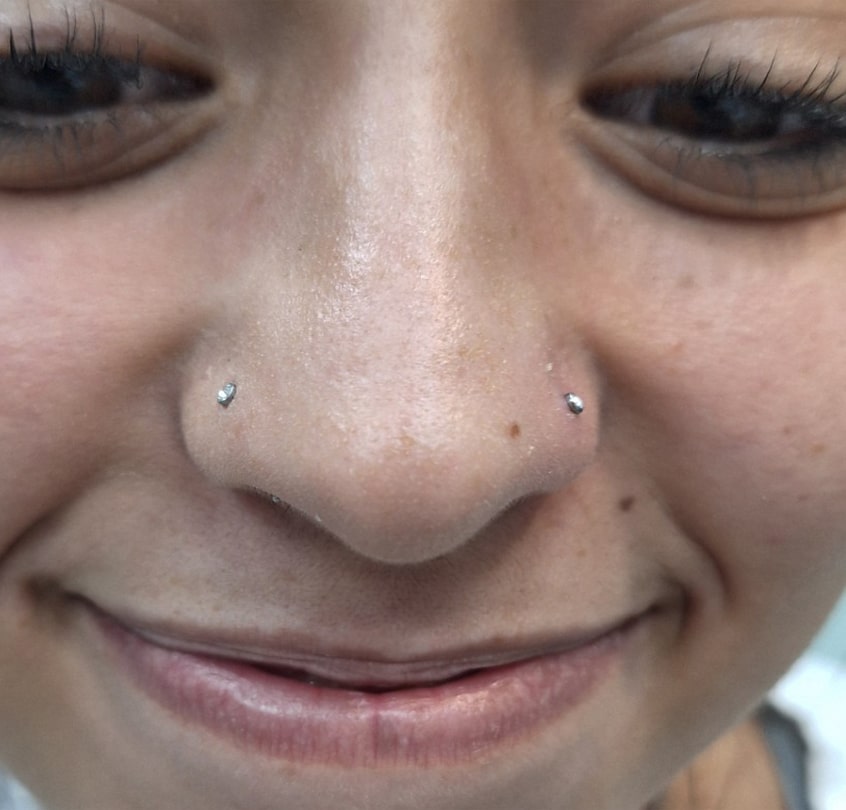
The nostril piercing is performed on the outside of the nose, specifically the nostril. This type of piercing is ideal for both those seeking their first facial piercing and those who wish to add a subtle or striking touch to their personal style.
Where to do it and how to choose the right studio?
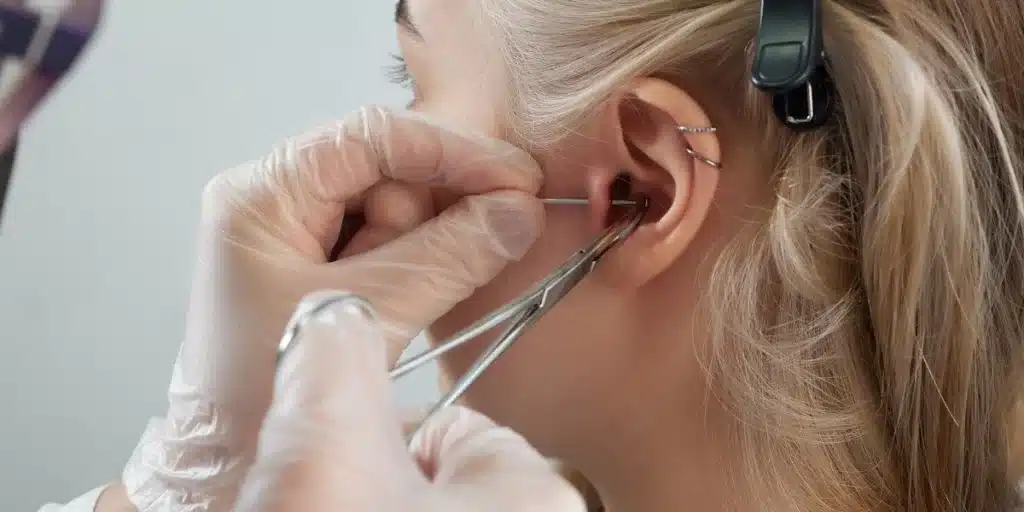
It is essential to go to a professional studio to guarantee a safe and quality procedure. Here are some tips on how to choose the right place:
Reputation of the studio: Research reviews online or ask for recommendations from people who have already had piercings done there.
Certifications: Make sure the piercer has the necessary qualifications and experience with nostril piercing.
Hygiene: The study should be clean, use sterile needles and have high quality equipment.
Pre-consultation: A good professional will assess your anatomy, listen to your expectations and answer any questions.
Avoid places that use piercing guns, as these are not recommended for the nose as they can cause trauma to the tissue and increase the risk of infection.
Initial piece:
Which Jewellery is Best?
The choice of the initial jewellery is crucial for the healing process. Ideal choices are:
Safe materials:
Implant grade titanium: It is hypoallergenic, lightweight and reduces the risk of allergic reactions.
Surgical steel: This is also a safe and economical option, although it may not be ideal for people with very sensitive skin.
Niobium: Similar to titanium in terms of safety.
Type of jewellery:
Straight or L-shaped stud: It is discreet and comfortable for most people.
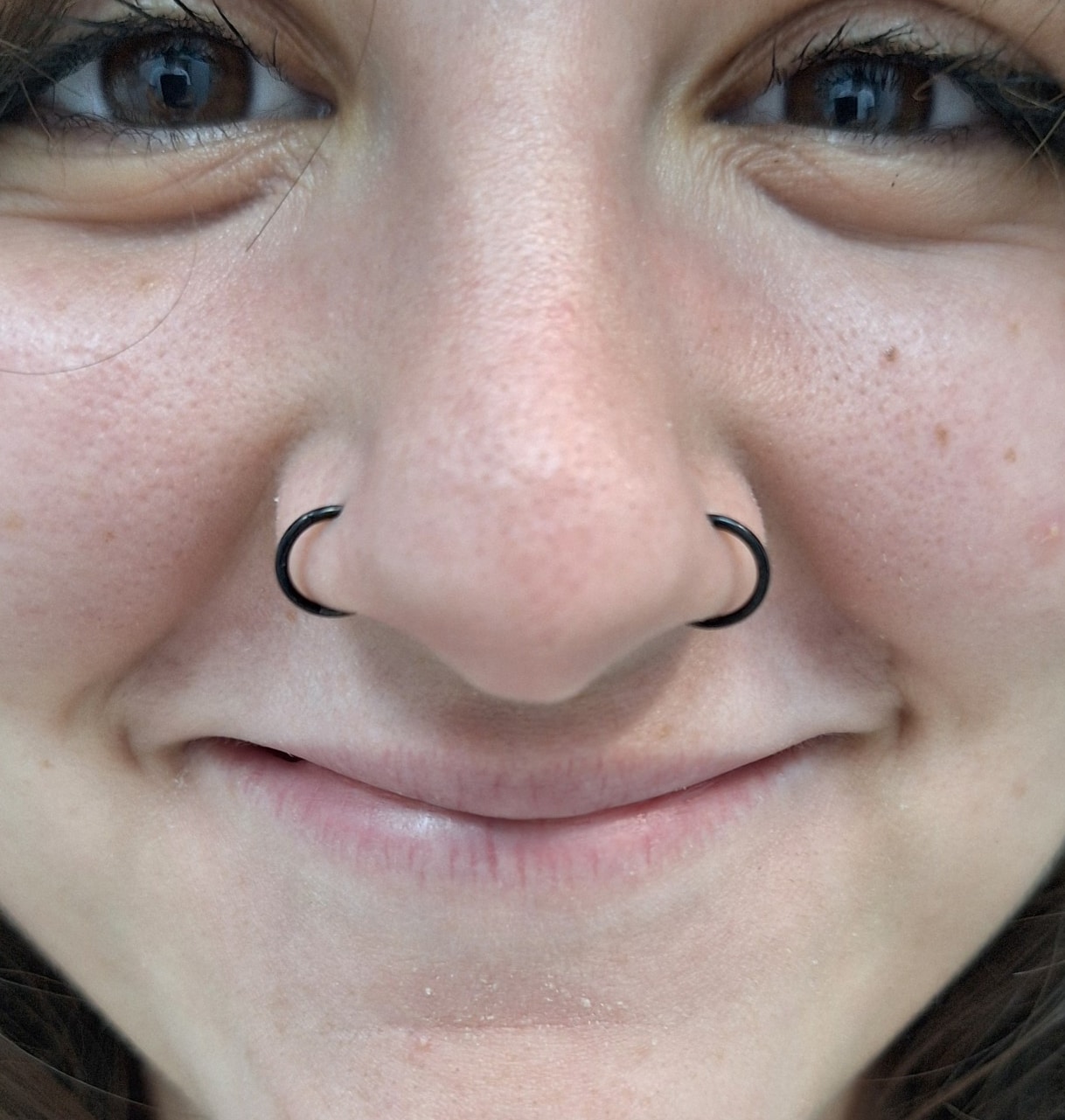
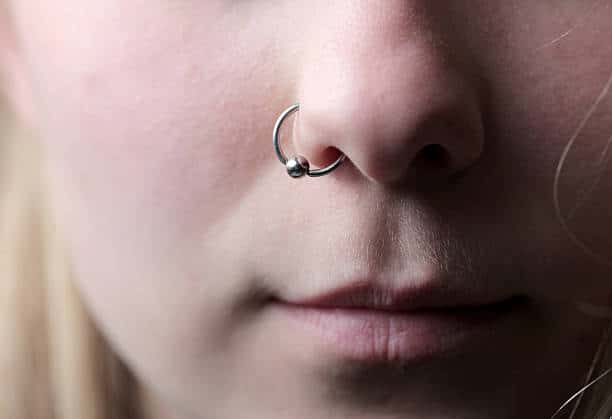
Closed ring: Can be used if anatomy permits, but is generally best used after initial healing.
Appropriate size: The piercer will select the thickness (usually 18G or 20G) and diameter according to the shape and size of your nose.
Aftercare:
Keep your Piercing Clean and Healthy
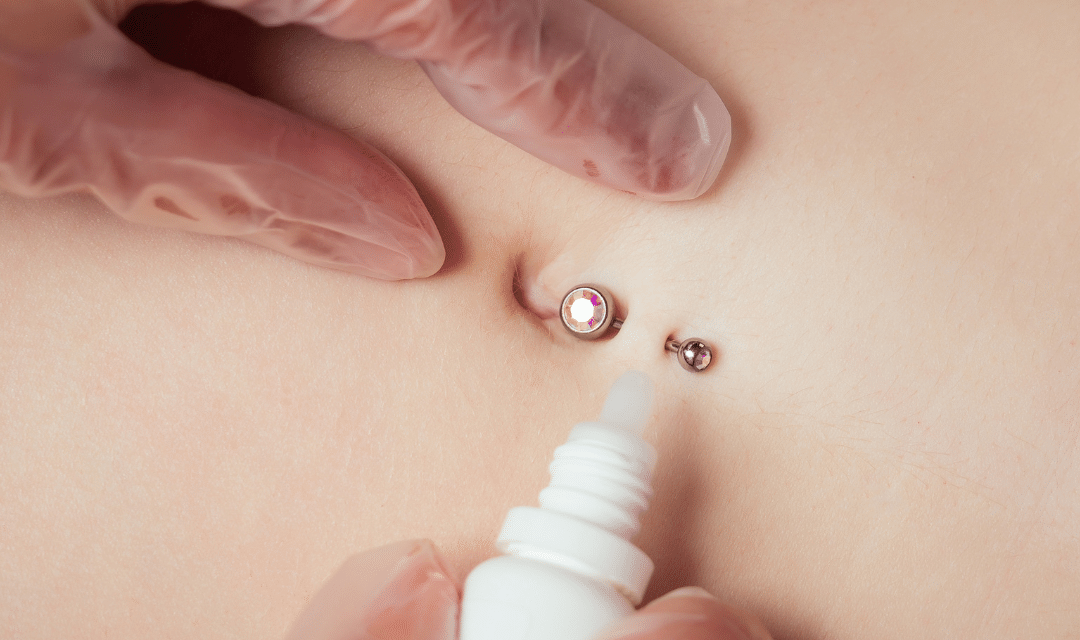
Post-piercing care is essential to prevent infection and ensure proper healing. Follow these steps:
Daily cleaning: Wash the area twice a day with sterile saline solution or a homemade mixture (boiled water and non-iodised salt).
Avoid touching: Do not handle the jewellery with dirty hands and do not twist the piercing unnecessarily.
Protection against external agents:
Avoid applying make-up during the healing process.
Do not expose the piercing to swimming pools, hot tubs or sea water for the first few weeks.
Take care with clothing: Be careful with scarves, tight T-shirts and towels that can get caught in the jewellery.
Healing
Healing time varies from person to person, but on average:
Initial time: 2-4 months, during which the external tissue heals.
Complete healing: May take up to 6 months or more.
During this period, it is essential to follow the care instructions and avoid changing the jewellery prematurely.
When to Change the Jewellery
The first jewellery change should be done by a professional. This is usually done between 2 and 4 months, depending on how your healing has progressed. Changing the piece prematurely can cause irritation or infection. Once healed, you can experiment with different styles and materials.
Which Side to Choose?
The choice of side is entirely personal. Some factors that may influence it include:
Personal style: Try on fake jewellery to see which side you like best.
Cultural symbolism: In some cultures, such as Indian, the left side is associated with fertility and health.
Facial aesthetics: You can choose the side you think best balances your face.
There is no "right" or more usual side, so choose what you like best.
Possible Complications and How to Avoid Them
Although the nostril piercing is generally safe, problems can arise if it is not properly cared for:
Infections: May manifest as redness, swelling or discharge. Maintain a strict cleansing routine.
Irritation or keloids: Avoid excessive handling of the jewellery and use hypoallergenic materials.
Hooks: Be careful when dressing and using towels.
If you notice signs of infection or persistent inflammation, consult your piercer or a doctor.
How much does it hurt?
Pain is subjective, but many people describe nostril piercing as a brief pinch. You may feel some heat or pressure, but the process is quick and well tolerated.
Nostril piercing is an elegant and versatile form of self-expression. By following these tips, you can enjoy your new accessory with confidence and style.