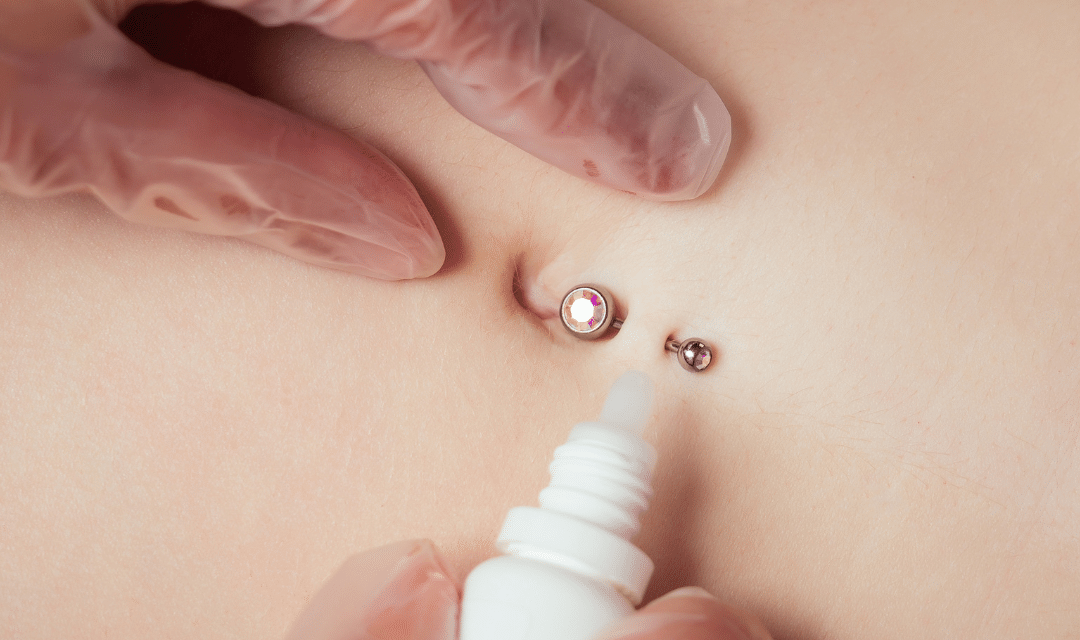
Learn about piercing care
Proper care of a piercing is essential to avoid infections, rejection, lumps or irregular scarring. Although materials and techniques have improved, aftercare remains the most important factor in recovery. In 2025, the professional trend focuses on the use of sterile saline, hypoallergenic jewellery and stricter hygienic habits.
Piercing care step by step (practical guide)
Here is the protocol recommended by professional piercers and specialised studios.
✔ Daily cleaning
- Wash your hands thoroughly before touching the piercing.
- Apply sterile saline solution twice daily.
- Leave to act for a few seconds.
- Dry gently with sterile gauze, never with towels.
- Do not move or turn the jewellery: this has not been recommended for years.
✔ Healthy habits while healing
Change your pillowcase every 2-3 days.
Avoid makeup, creams or perfumes in the area of the piercing.
Don't use cotton swabs: they retain bacteria.
Shower normally, letting the water run without scrubbing.
✔ Physical activity and leisure
No swimming pools, hot tubs or beaches for 3-4 weeks.
In the gym, it dries sweat quickly.
Avoid bumping, pulling or snagging the jewellery on clothing or masks.
Common mistakes that continue to damage thousands of piercings
❌ 1. Change jewellery too early
Causes irritation, granulomas, partial closure and risk of infection.
❌ 2. Wearing cheap jewellery
Materials of dubious quality generate allergies and rejection.
Implant Grade Titanium or 316L Surgical Steel are the best choices.
❌ 3. Sleeping on the piercing
Continuous pressure = displacement and irregular healing.
❌ 4. Touching the piercing all day long
90% of infections come from contact with unclean hands.
❌ 5. Self-diagnosis of lumps or infections
Many customers are confused:
Irritation ≠ infection
Granuloma ≠ keloid
Normal discharge ≠ pus
The in-studio review usually resolves queries within minutes.
Warning signs: when to go to the study or to the doctor
If you experience any of these symptoms, seek professional help:
Pain that increases over the days
Yellow or greenish pus with bad odour
Intense redness that spreads
Rapidly growing lump
Fever or severe swelling
Early detection prevents complications and permanent scarring.
Professional advice on how to speed up the healing process
Piercers recommend adopting these habits to improve recovery:
Adequate sleep (8 hours).
Reduce alcohol and tobacco, which hinder regeneration.
Keep mobile phone, bedding and headphones clean.
Wear loose-fitting clothing if the piercing is on the torso or waist.
Minimise stress: it affects the immune system.
Quick check-list to print or save
Daily routine
[Washing hands
[Apply saline solution or Specific Piercing Solution
[Dry with gauze
[Do not rotate the jewellery
Weekly routine
[ ] Change pillowcase
[Disinfecting the mobile phone
[ ] Reduce activities that involve prolonged wetness
Monthly routine
[ ] Jewellery setting check
[Consult in study if persistent lump or discomfort appears.
[Check the area in the mirror