

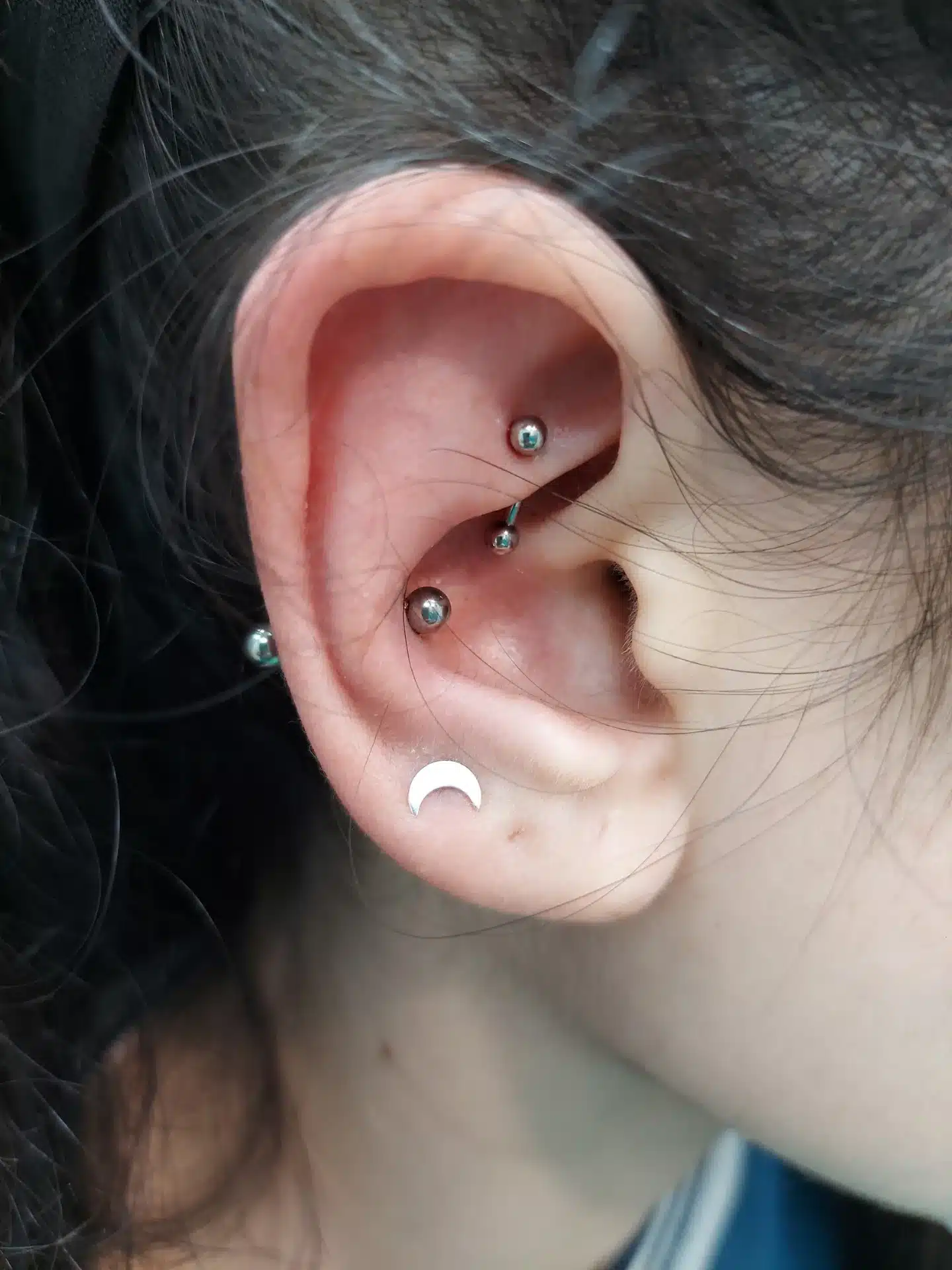
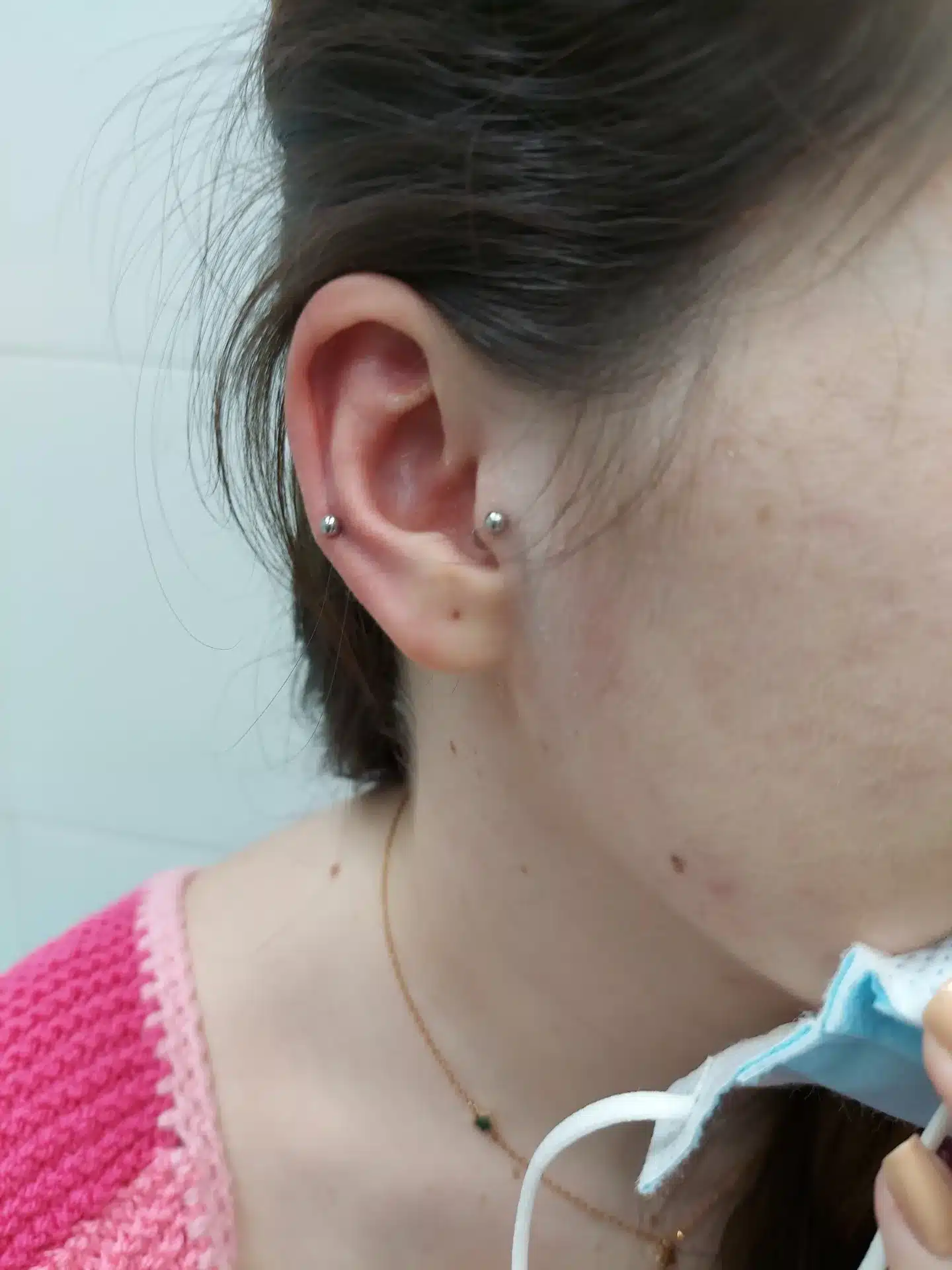
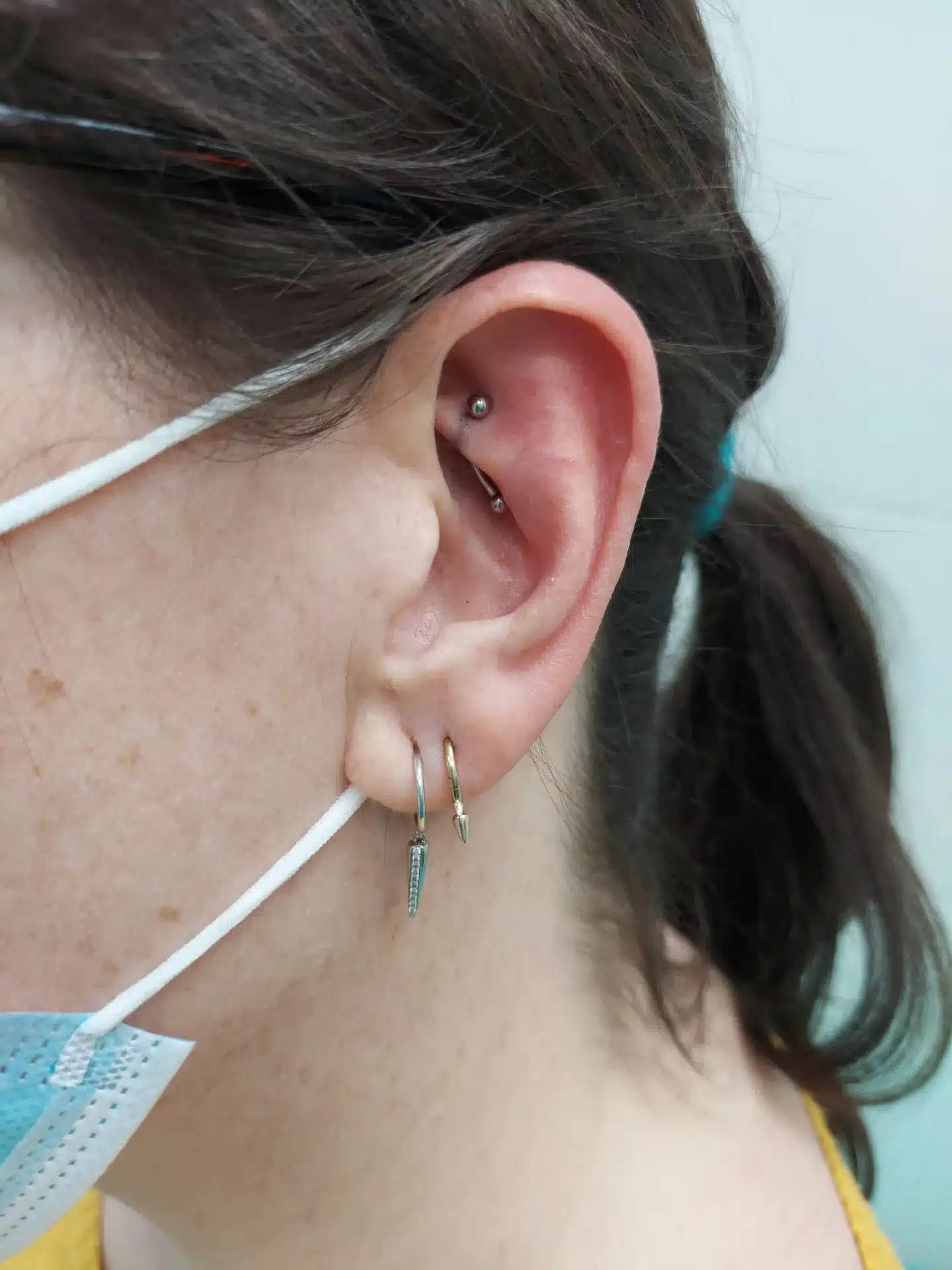
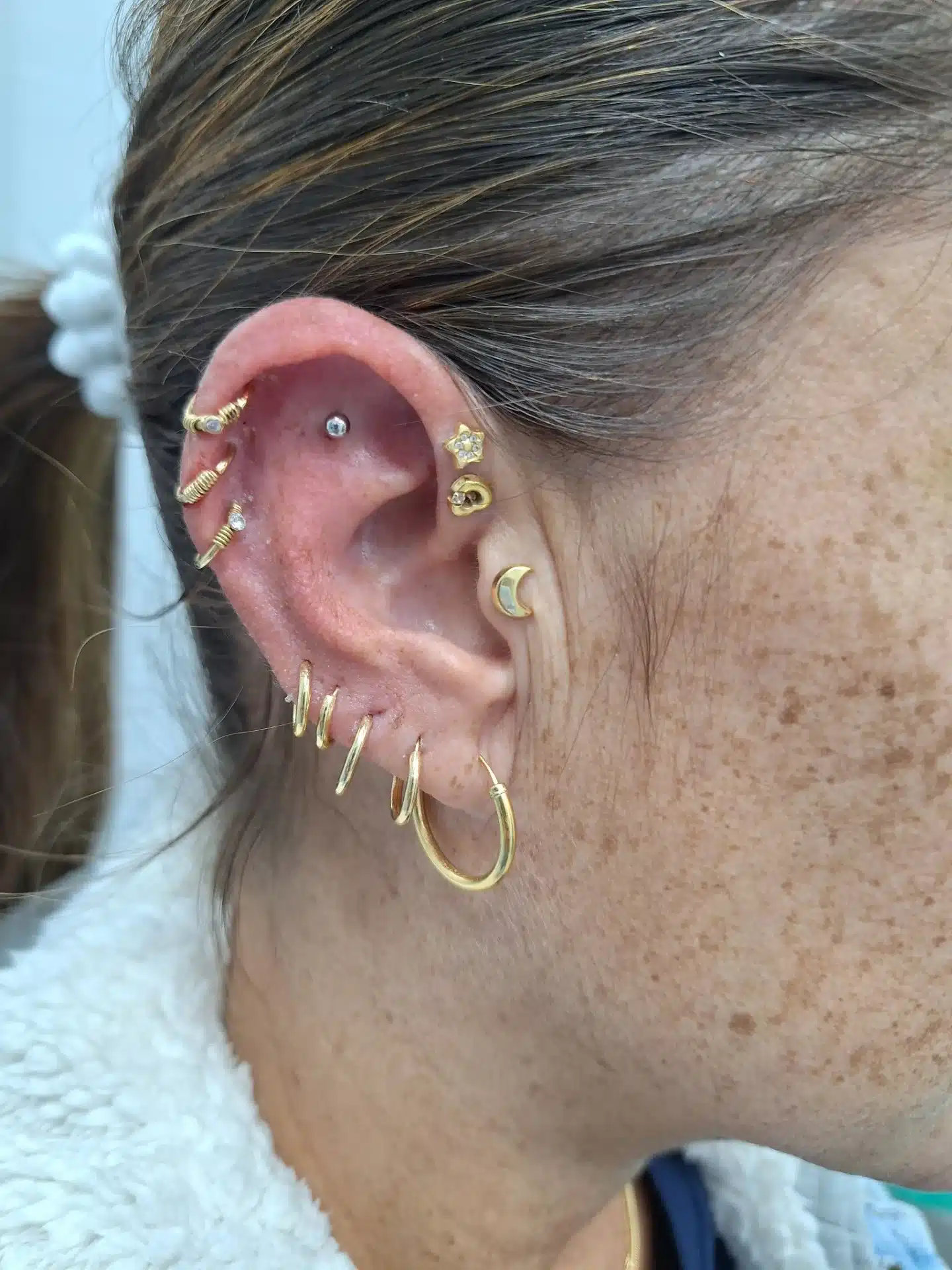
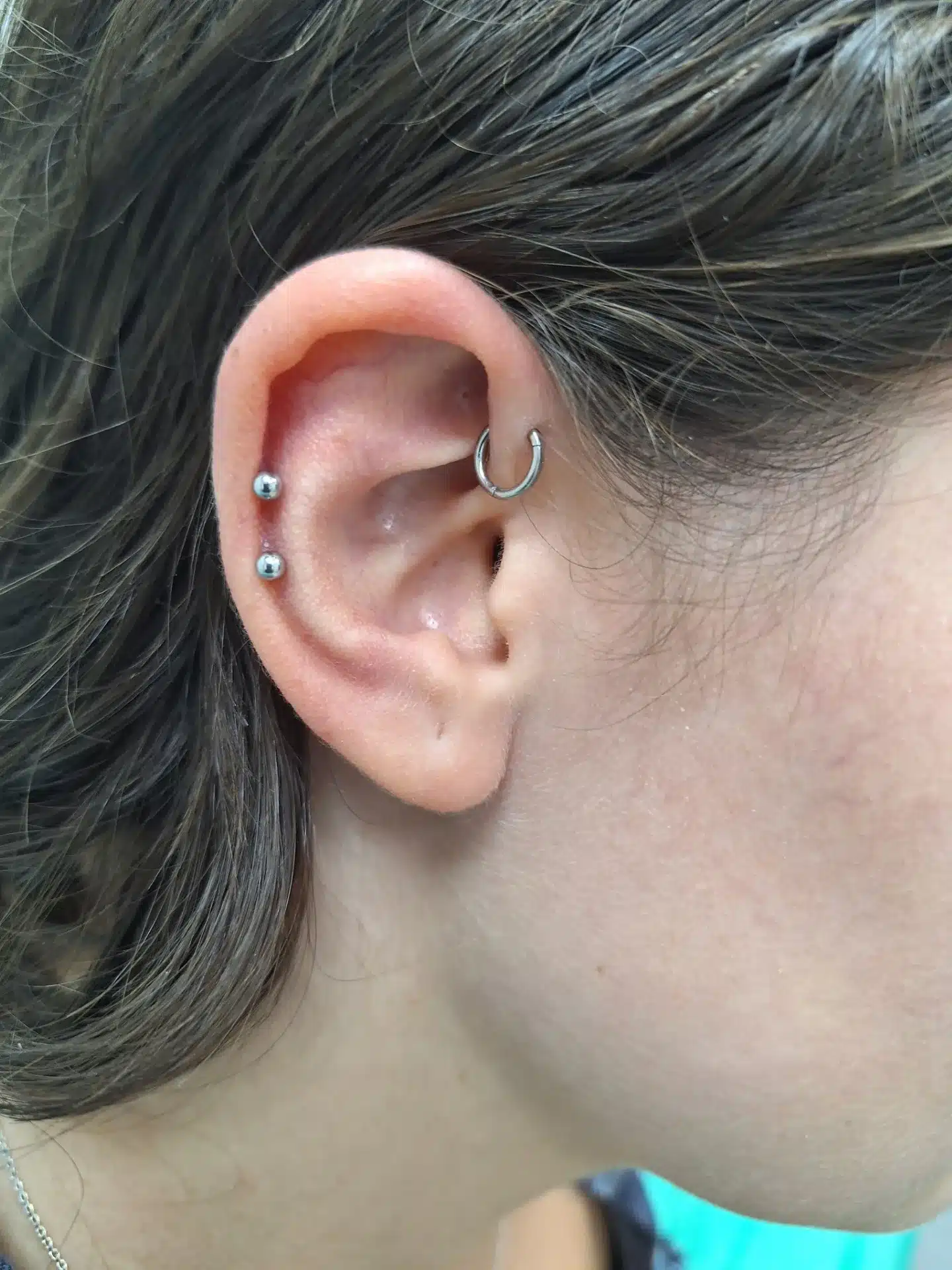
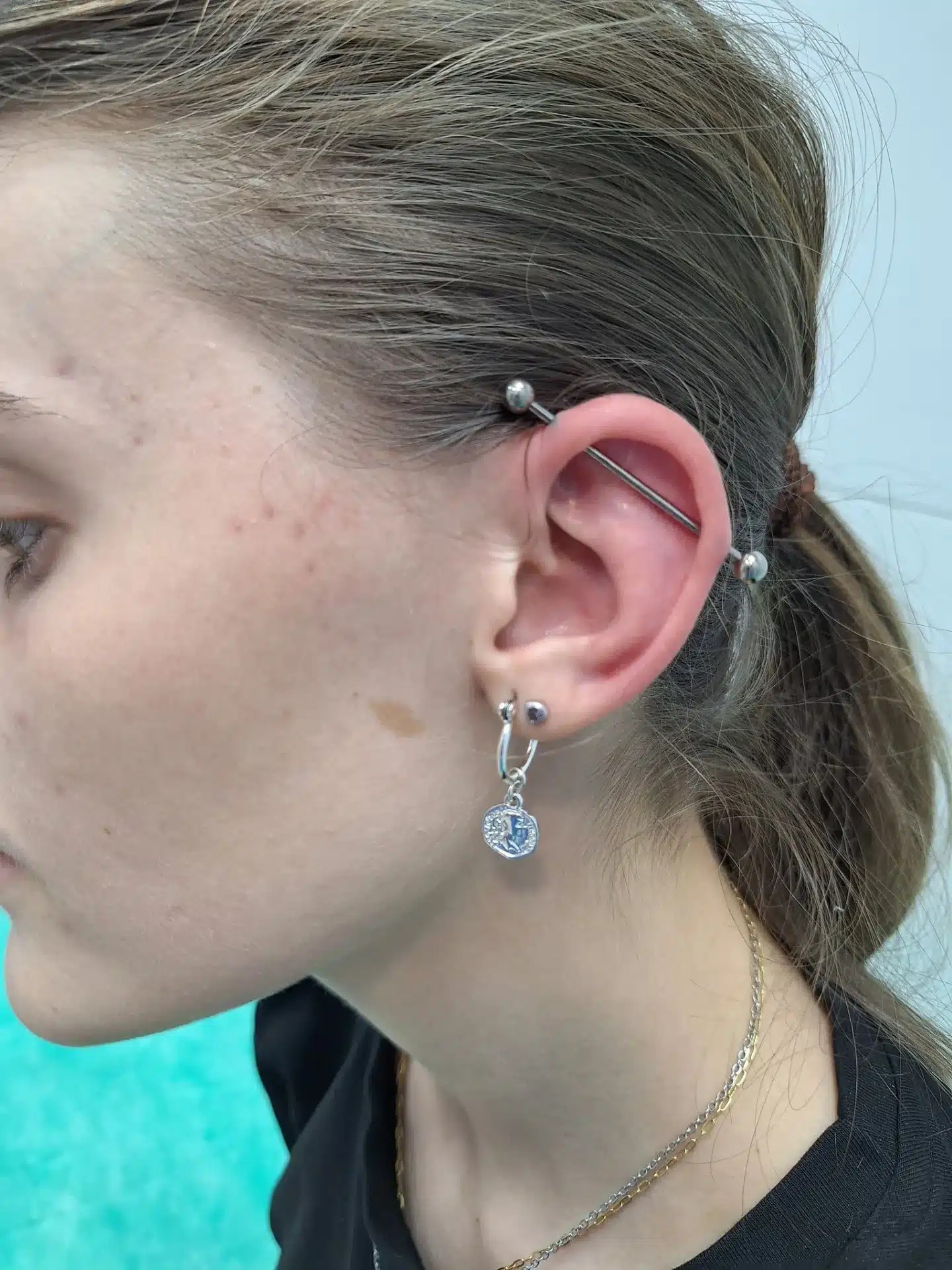
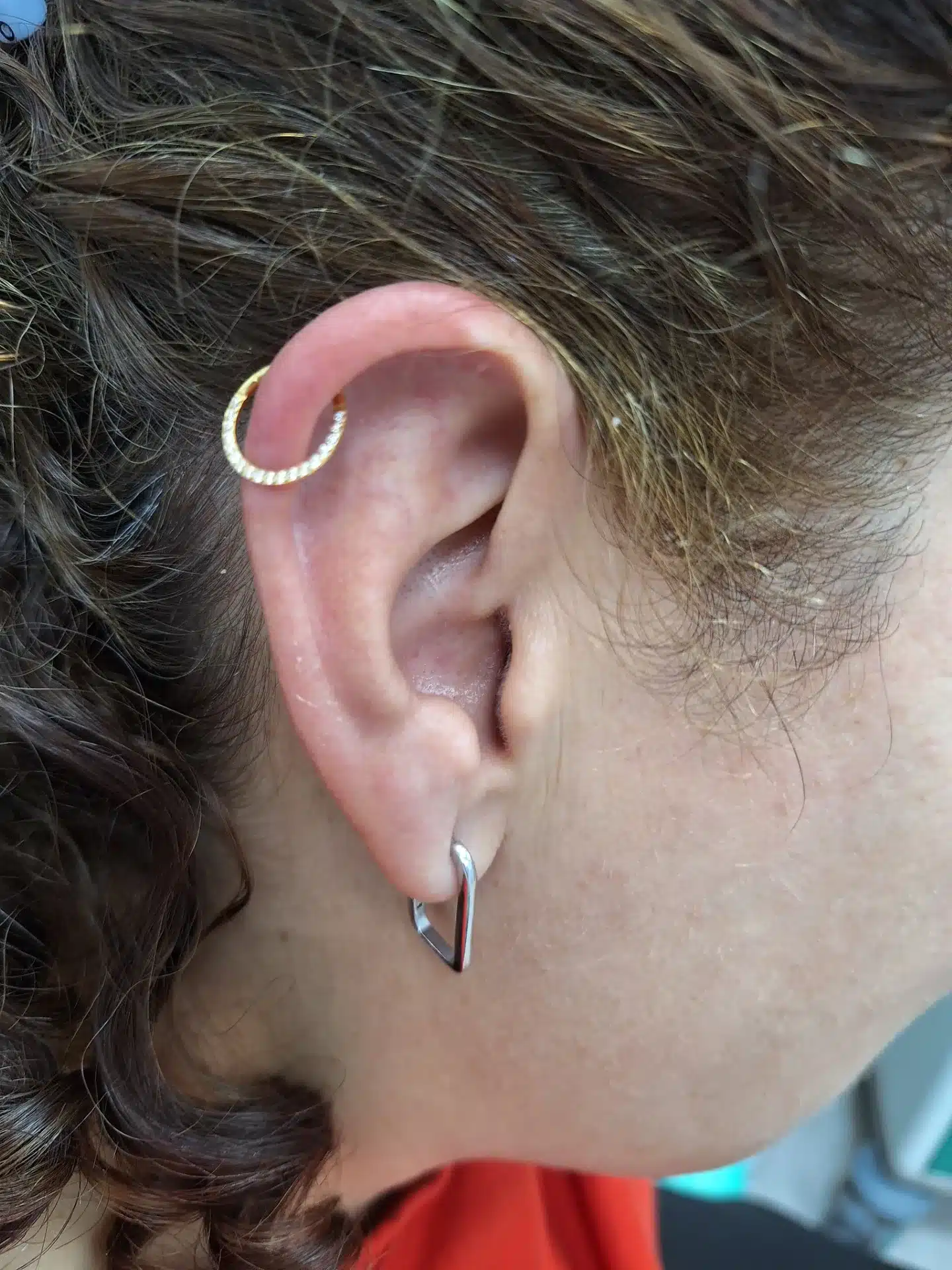
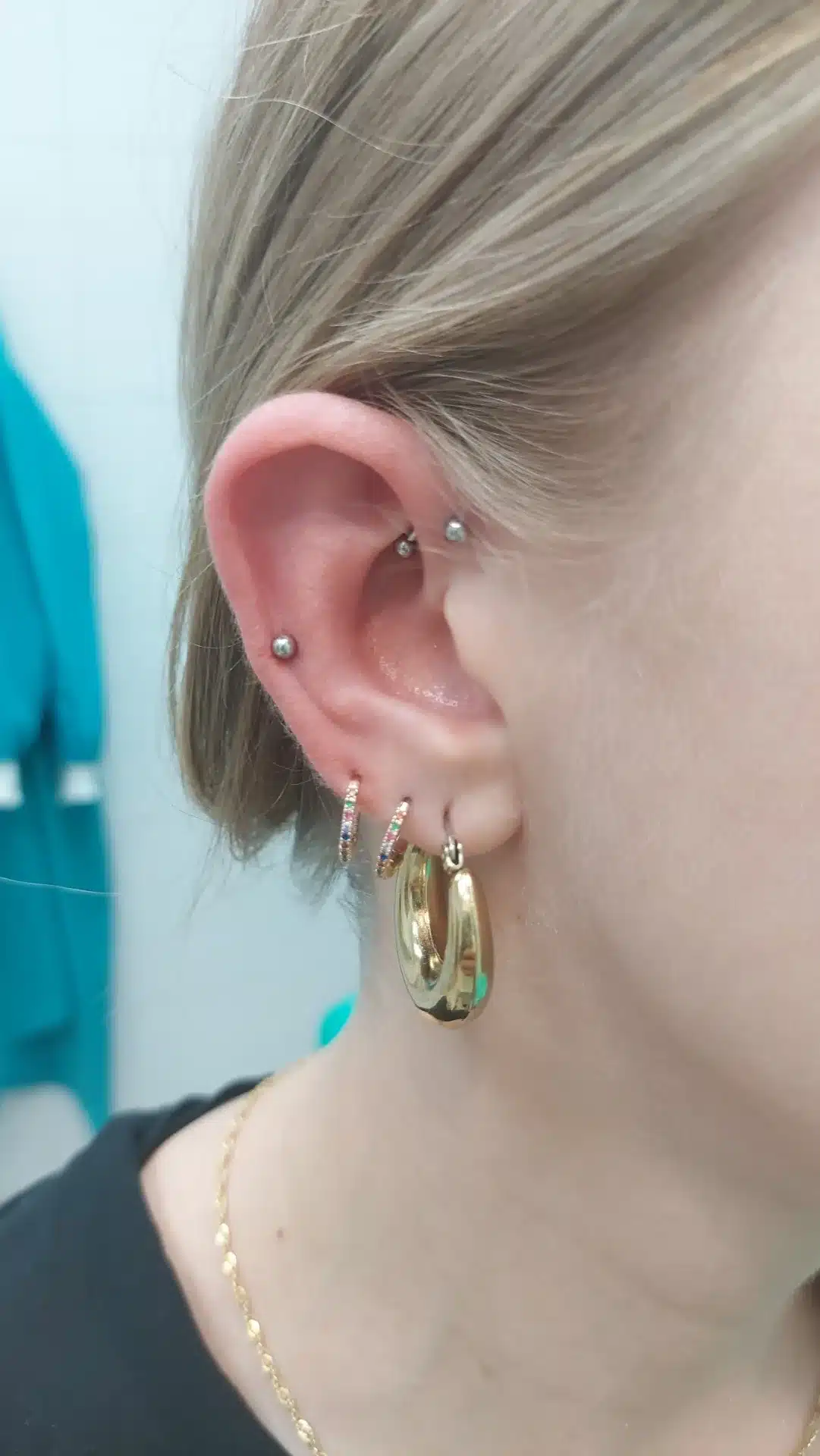
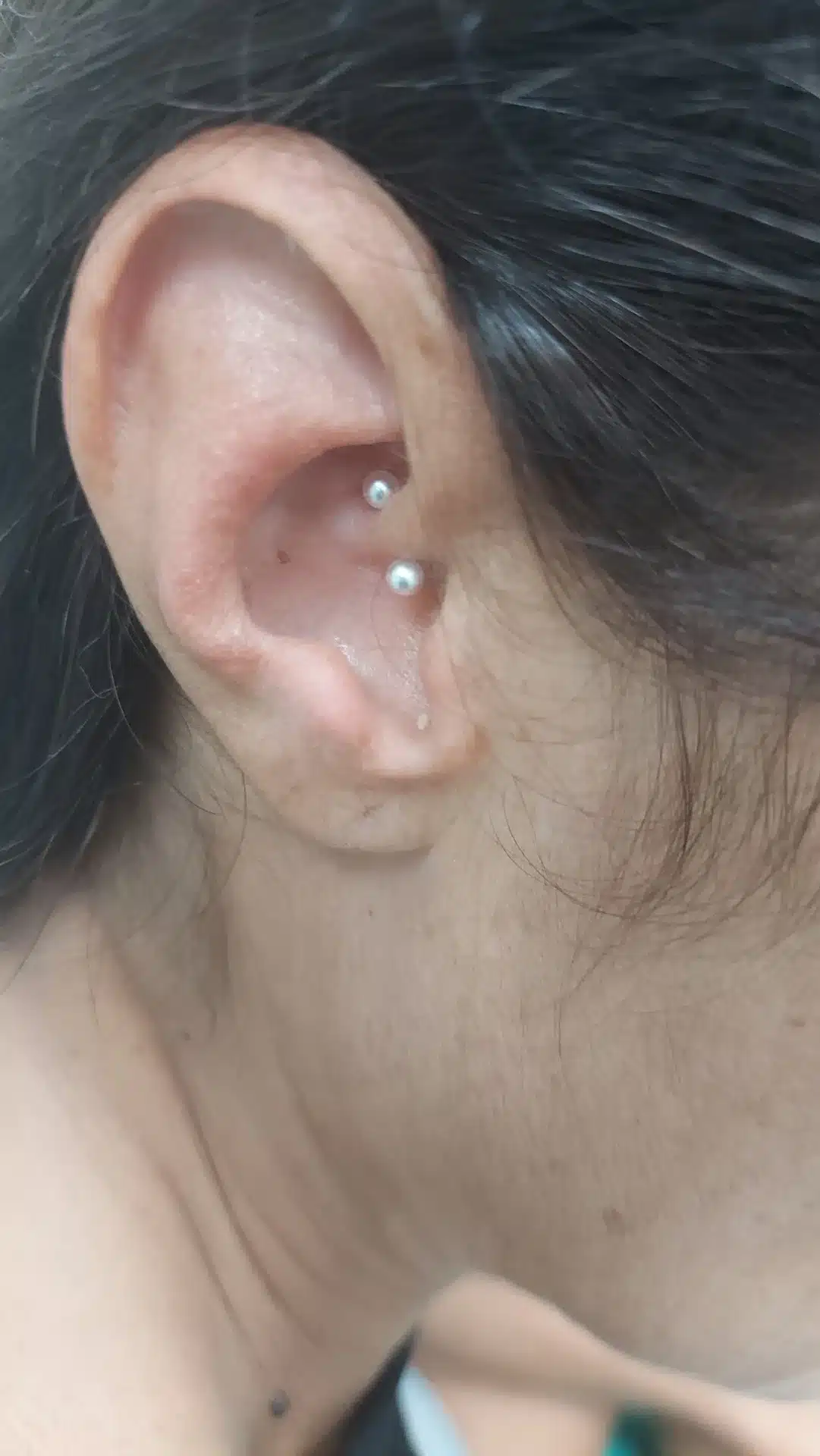
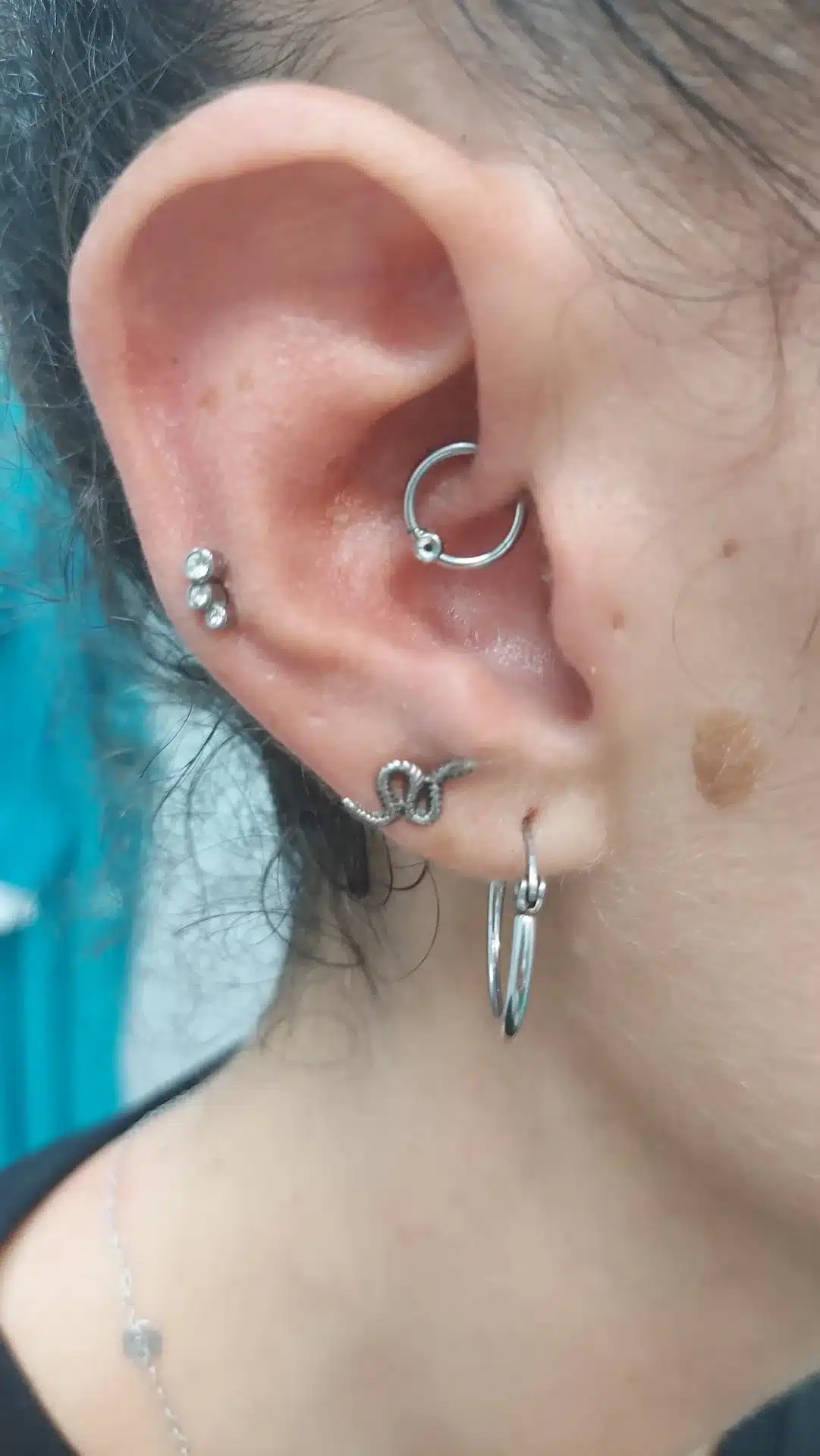
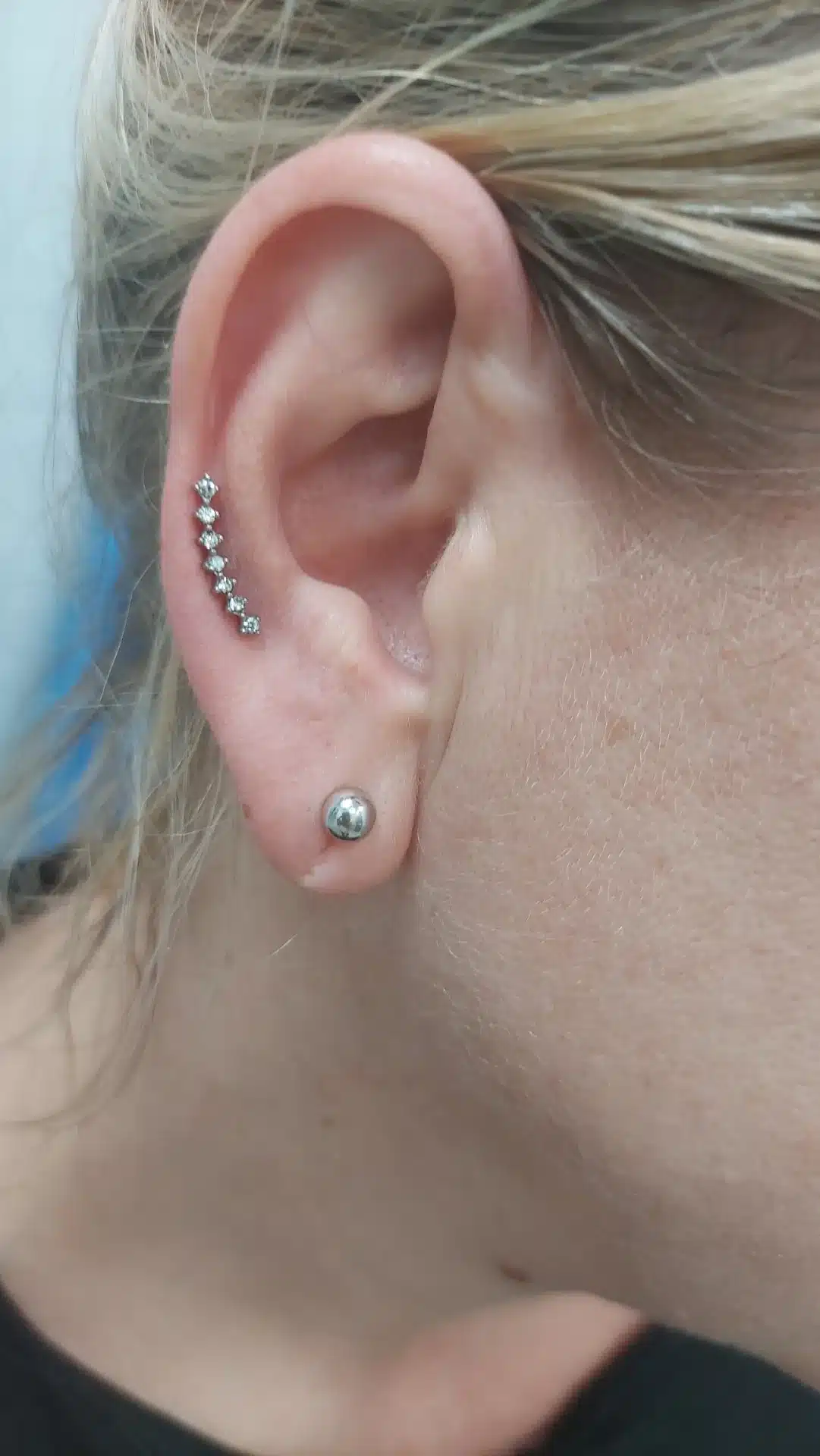
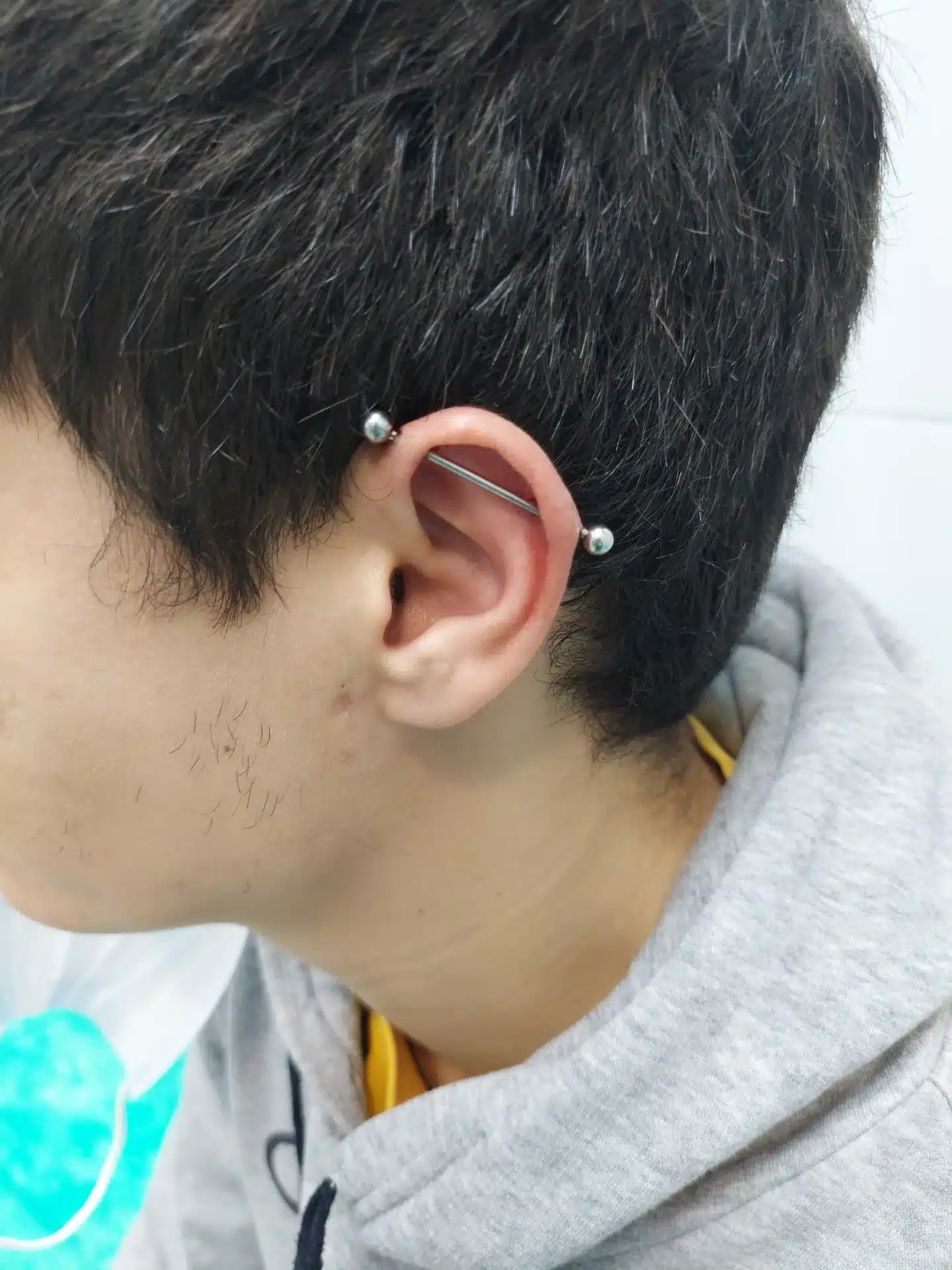
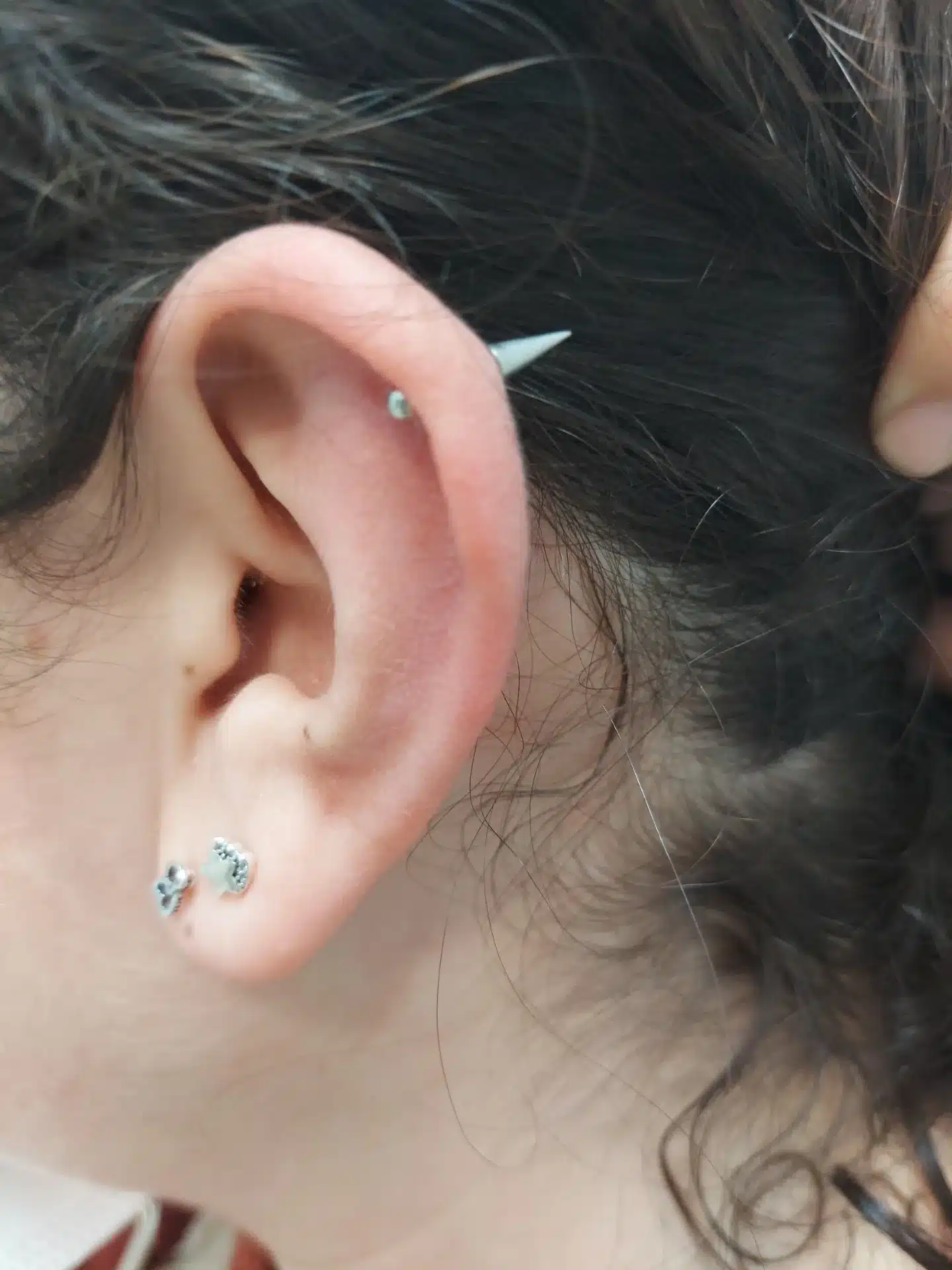
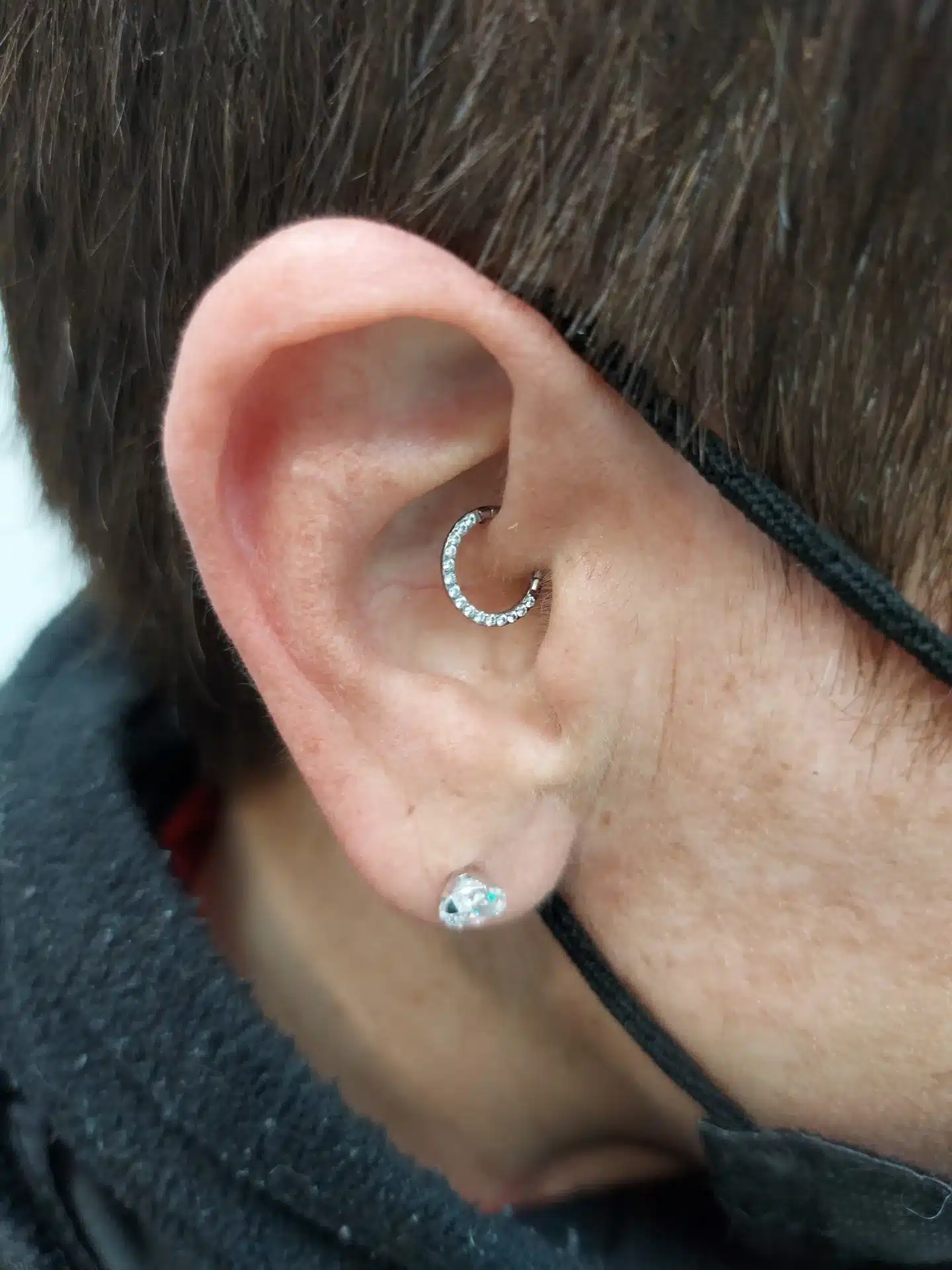
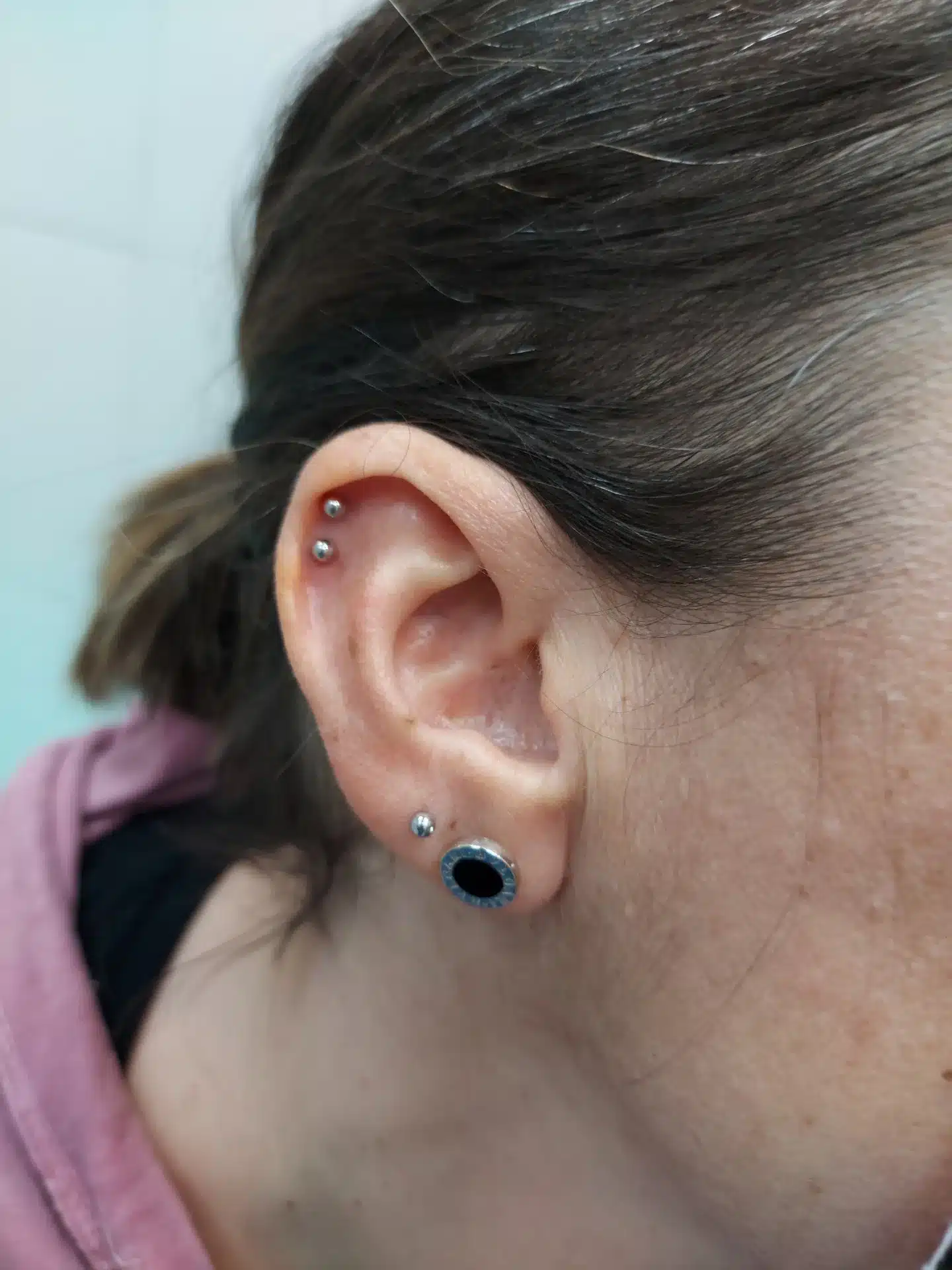
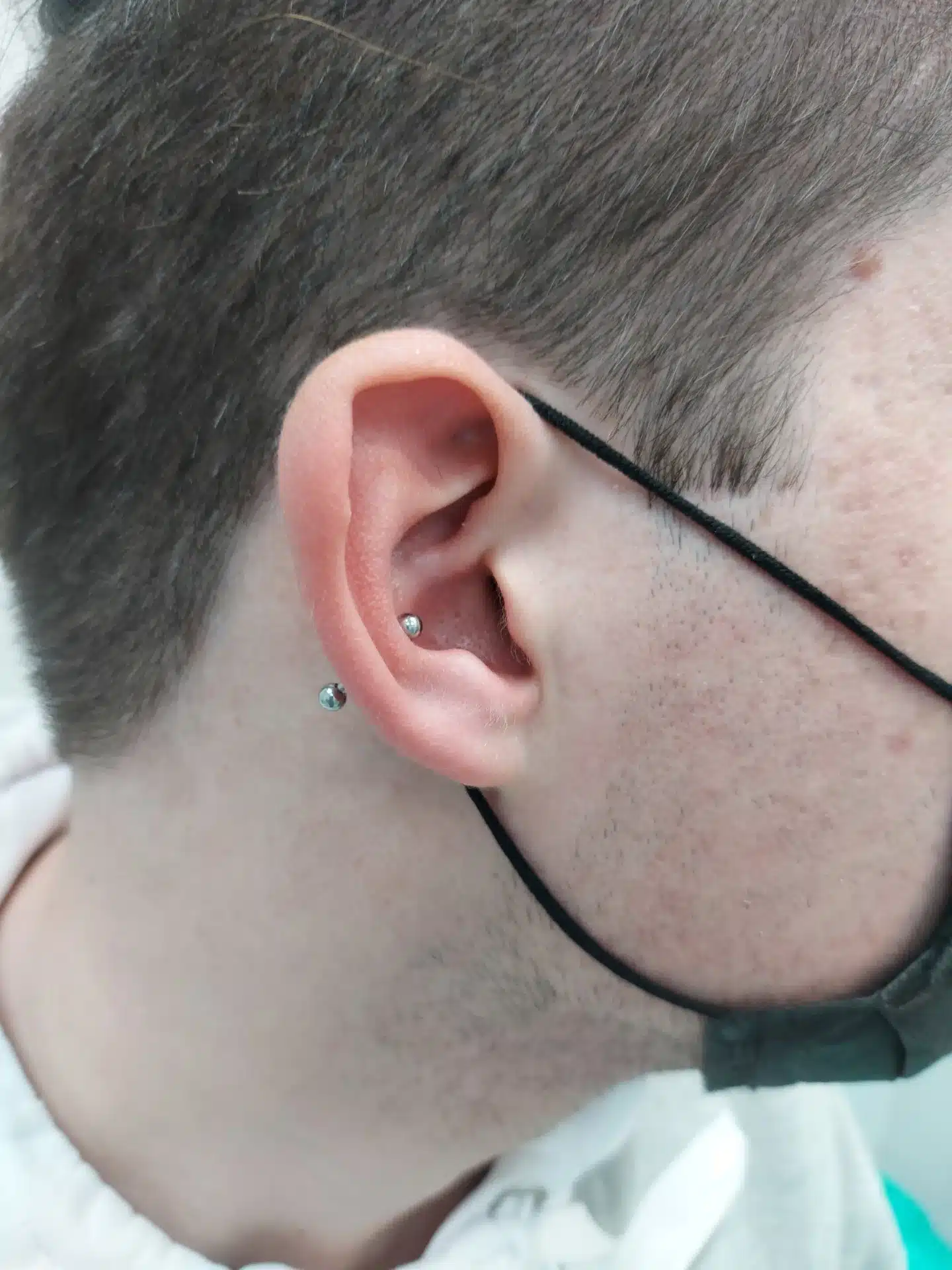
Ear cartilage piercing is a popular form of self-expression and body adornment. However, before deciding on this type of piercing, it is important to understand all the aspects involved, from safety to aftercare. Here's a complete guide to a safe and satisfying ear cartilage piercing experience.
Security and Preparedness
- Choose a Professional Piercer Safety is paramount. Do your research and look for a professional piercer with experience and good reviews. A licensed professional will use sterilised equipment and follow rigorous hygiene practices.
- Initial Consultation Before the piercing, you will have a consultation with the piercer to discuss your expectations and possible complications. Make sure you ask any questions you have and understand the process.
- Jewellery selection Be sure to choose high quality jewellery, preferably made of materials such as 316L surgical steel, titanium or niobium. Choosing quality jewellery reduces the risk of irritation and allergies.
Hygiene and Procedure
- Sterilisation Equipment used must be sterilised before use. Ensure that the piercer uses disposable gloves and materials to avoid infection.
- Dialling The piercer will mark the exact spot where the piercing will be done to make sure you are satisfied with the location.
- Pain : Cartilage piercings are somewhat painful, think of it as a pin prick.
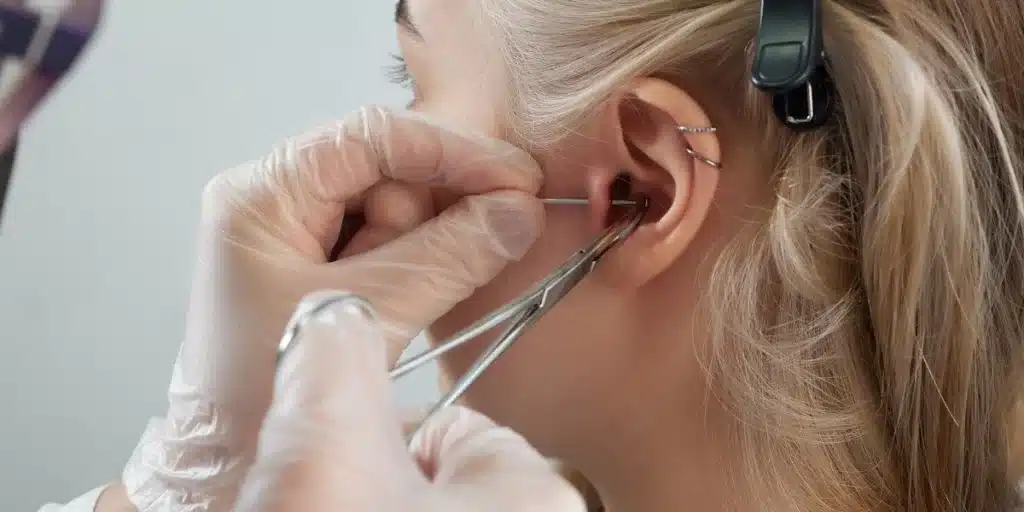
- Drilling The piercer will use a sterile needle to perform the piercing. Breathe deeply and try to stay relaxed during the procedure.
Piercing care
- Cleaning Clean the piercing twice a day and then apply a mild saline solution, or a specific piercing care serum sold at your studio. Avoid alcohol-based products, hydrogen peroxide or essential oils, as they can irritate the skin.
- Rotation Gently turn the jewellery once a day to prevent it from sticking to the skin.
- Evita Toques Do not touch the piercing with dirty hands and avoid playing with the jewellery.
- Jewellery exchange Do not change the jewellery during the healing period, which is usually 6 to 12 months.
- Avoid Chemicals Avoid contact with chemicals such as perfumes, lotions and hair products in the piercing area.
Possible complications
- Infection If you notice excessive redness, swelling, yellow discharge or fever, consult Piercer or a health care professional.
- Keloids or keloids Some people may develop raised scars. Consult a dermatologist if in doubt.
- Rejection Occasionally, the body may reject the jewellery. If you notice that the piercing moves or becomes shallower, consult your piercer.
.
Importance of a Professional Piercer
A professional piercer has the experience and knowledge to perform the piercing safely and minimise the risks of infection and complications. They will also provide you with information on aftercare and help you troubleshoot problems if they arise.
In summary, ear cartilage piercing is a beautiful form of self-expression, but it requires care and consideration. Be sure to prioritise safety, hygiene and proper care to make your experience as positive as possible. By following these guidelines and trusting a professional piercer, you can enjoy your new ear cartilage piercing with confidence and style.
Lorem ipsum dolor sit amet, consectetur adipiscing elit. Ut elit tellus, luctus nec ullamcorper mattis, pulvinar dapibus leo.



1 thought on “Piercing Cartilago: Guia Completa”
Many photos, I don't know which one to choose