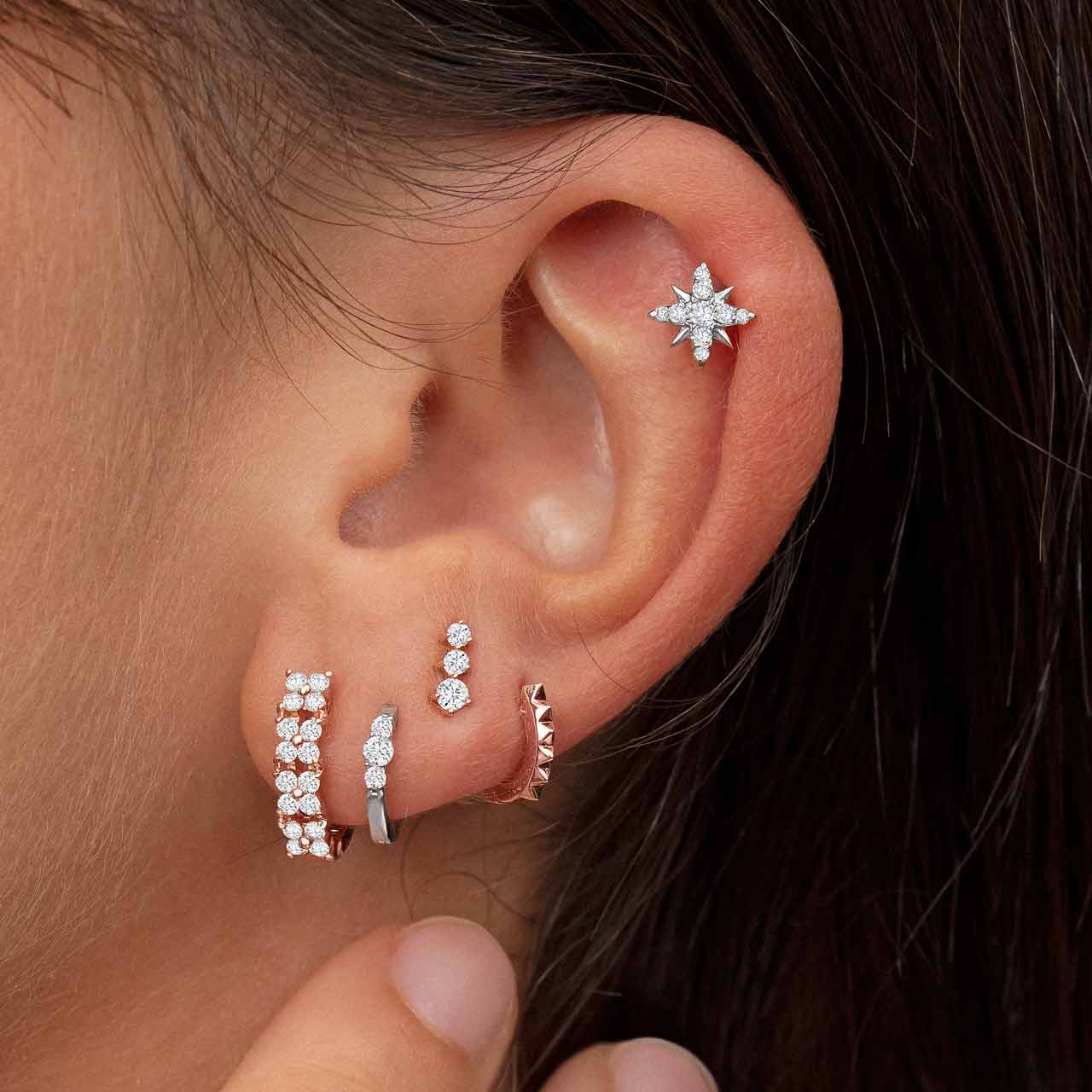

Curated Ear: The Art of Ear Design with Piercings
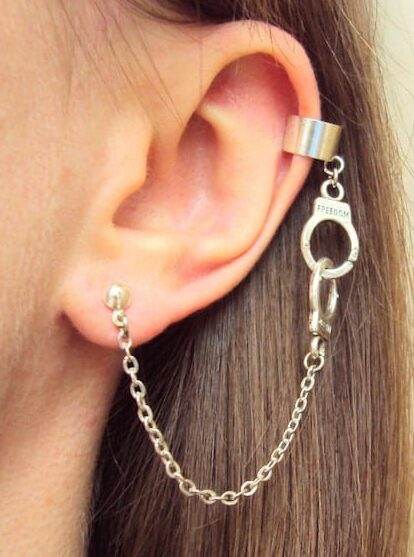
The world of body piercing has evolved beyond the simple choice of a standard piercing. One of the most prominent trends in recent years is the "Curated Ear", a concept that has revolutionised the way people adorn their ears. It is a customised combination of piercings and jewellery that allows you to create a unique and harmonious style.
What is the "Curated Ear"?
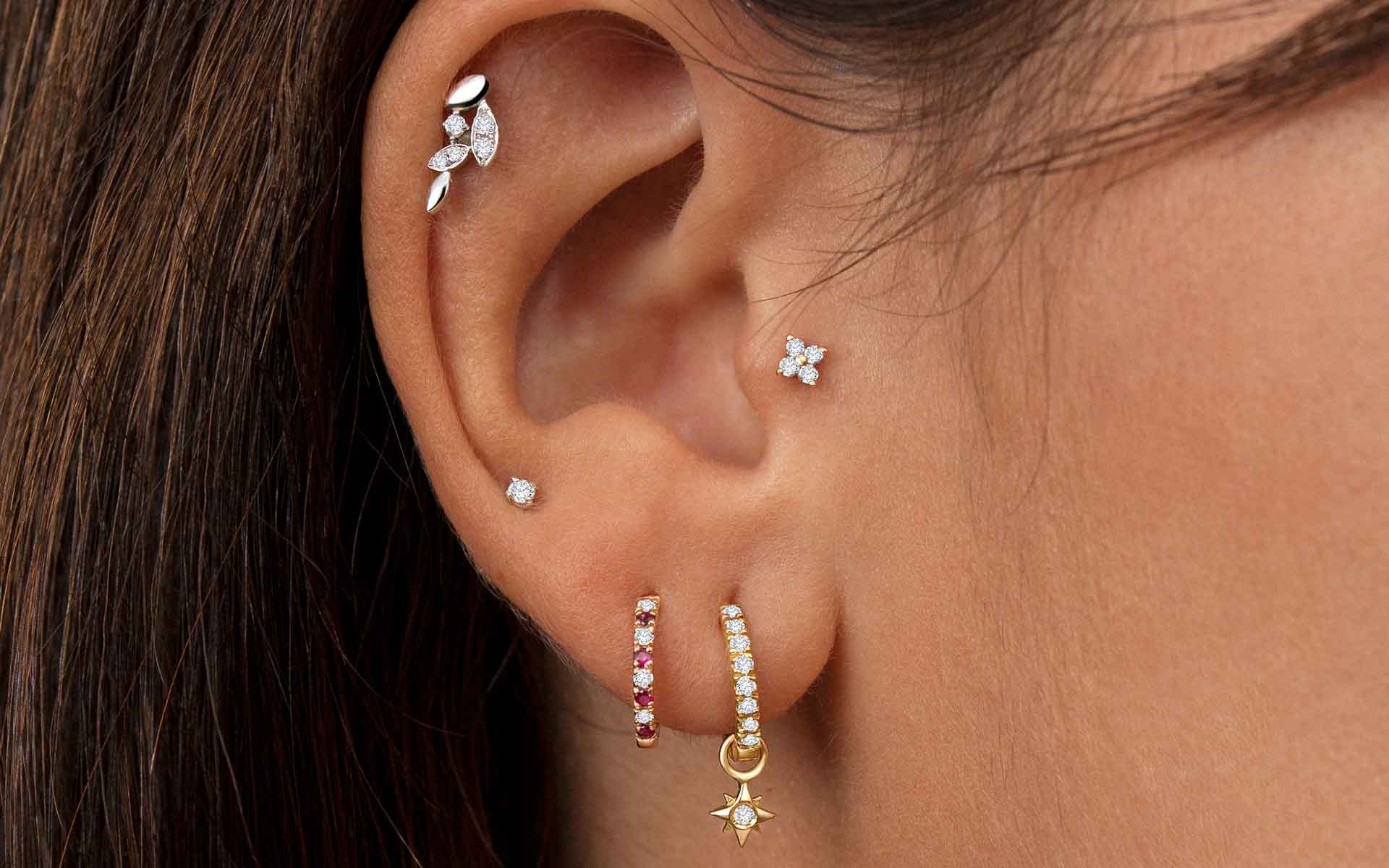
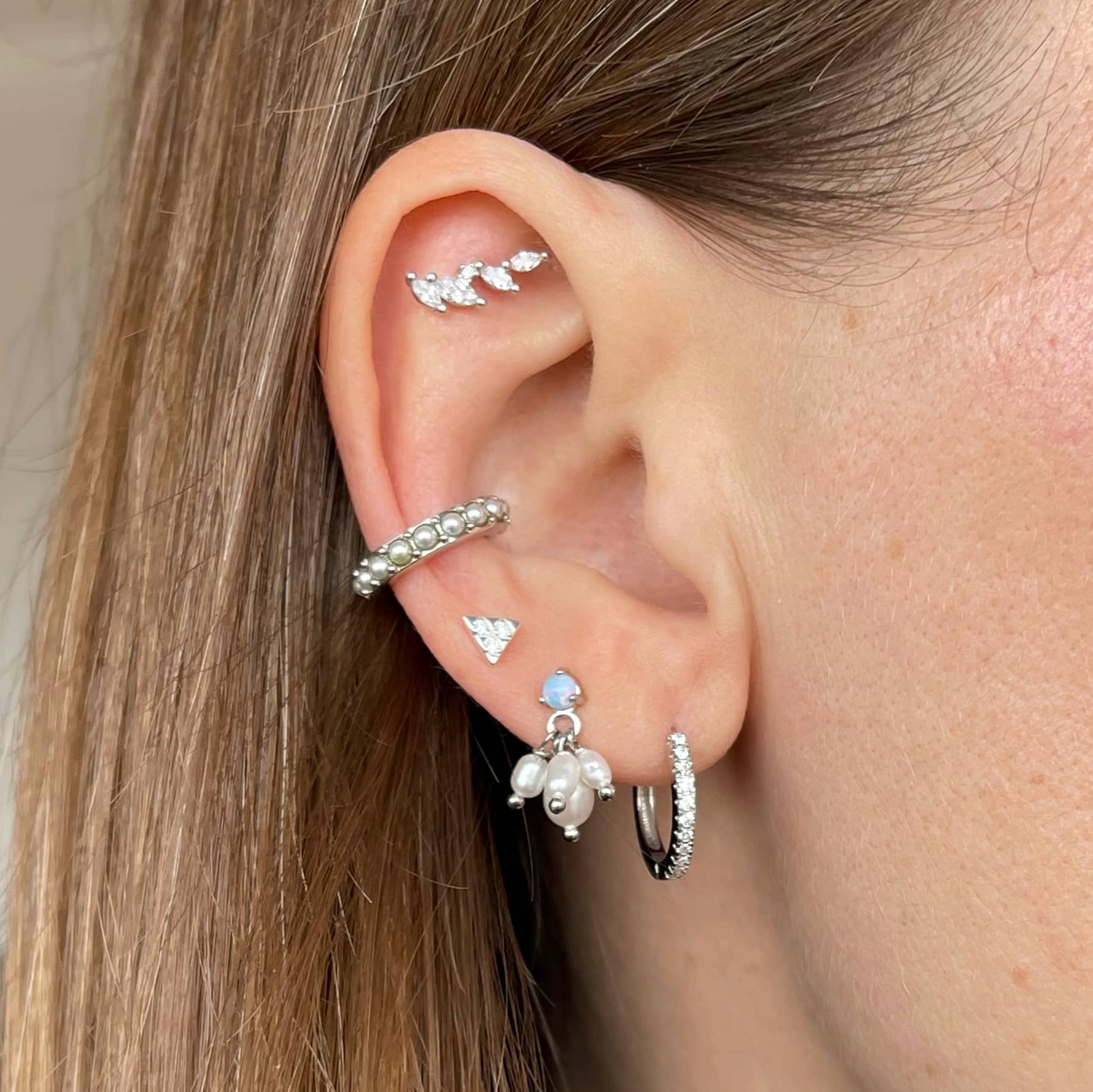
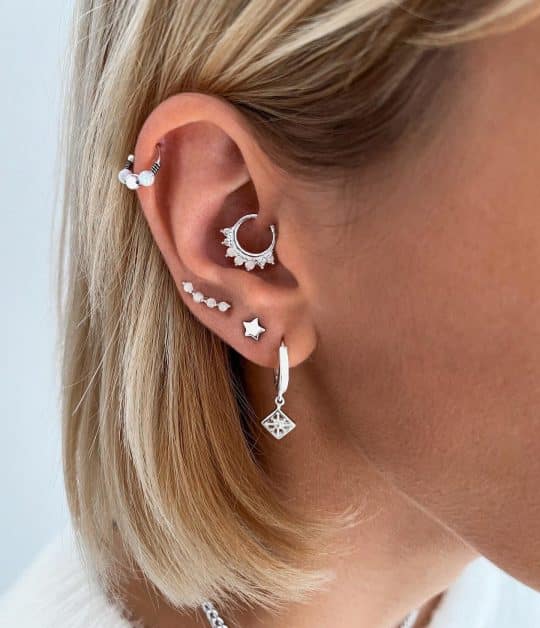
The term "Curated Ear" refers to the practice of designing and combining multiple ear piercings with an aesthetic and personalised approach. Unlike traditional piercings, which are often done in isolation, the Curated Ear considers the individual's anatomy, personal style and overall harmony of the composition to achieve visual harmony.
The trend was popularised by piercer Maria Tash, who took the concept of piercing to another level by designing compositions that function as a work of art in the ear. The idea has gained widespread popularity on social media and in high-end piercing studios, making it a popular choice for those seeking a sophisticated and unique look.

What does the "Curated Ear" look for?
The main objective of the "Curated Ear" is to achieve a balanced and aesthetically appealing combination of ear piercing and ear jewellery. This involves considering several factors, such as:
- Individual anatomyCurated Ear: Not all ears are the same shape and do not allow the same types of piercings. A good "Curated Ear" design adapts to the natural structure of the ear.
- Personal styleFrom a minimalist and delicate look to a bolder and more striking appearance, the choice of piercings and jewellery should reflect each individual's personality.
- Materials and qualityThe choice of jewellery is fundamental. High quality pieces are used, usually in 14k or 18k gold, titanium or surgical steel, with details such as diamonds, precious stones and geometric shapes.
- Harmonic compositionThe aim is to strike a balance between existing and new perforations, creating a visually pleasing and well-distributed aesthetic.

Types of perforations in a "Curated Ear".
A Curated Ear design may include a combination of different perforations, the most common of which include:
- LobeThe most common perforation, but in a "Curated Ear" several can be added at different heights of the lobe.
- Helix (Helix)Located in the upper outer cartilage of the ear.
- Forward Helix: Located at the front of the upper cartilage, near the head.
- TragusPerforation in the small cartilage in front of the ear canal.
- AntitragusLocated in the area opposite the tragus, in the lower part of the cartilage.
- DaithLocated in the innermost fold of the ear cartilage.
- ConchPerforation of the internal cartilage, allowing the fitting of large rings or striking studs.
- RookOn the upper inner part of the cartilage, creating a sophisticated look.
- SnugOne of the most visible perforations in the middle part of the external cartilage.
- IndustrialThe cartilage is made up of two perforations in the upper part of the cartilage connected by a straight bar.
How to create a "Curated Ear"?
To achieve a harmonious design, it is advisable to use a professional perforator with experience in this style. The process generally includes:
- Ear assessmentThe anatomy is analysed to determine which perforations are viable.
- Customised designThe distribution of the perforations is planned according to the desired style.
- Jewellery selectionQuality pieces are chosen to complement the design.
- Drilling processIt is performed in sessions according to the healing capacity of the skin.
- Maintenance and careGood post-drilling care is key to avoiding infection and ensuring proper healing.
Conclusion
The "Curated Ear" is a form of self-expression that goes beyond a simple piercing. It is an artistic and personalised combination that allows each person to wear unique jewellery adapted to their style. If you are interested in this trend, go to a professional studio where they can advise you to achieve a harmonious and safe design.
.
Thanks to our head Piercer for the information to be able to write this article.