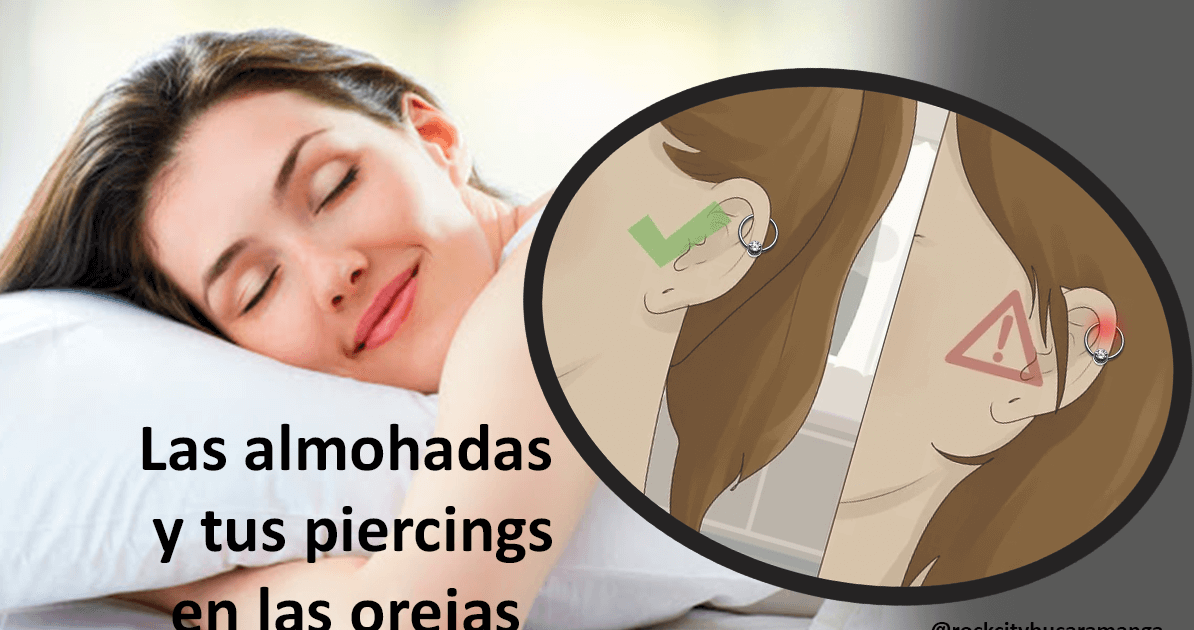
Tips and Advice for Pain Free Piercing
Getting a new ear piercing is an exciting experience, as it adds a touch of personal style. However, one of the biggest discomforts that can arise after getting pierced is difficulty sleeping. The pain and swelling can make a night's rest more of a challenge than a pleasure. Fortunately, there are several tips and tricks that can help you sleep comfortably without compromising the healing of your new piercing. Here are a few tips or recommendations to make adjusting to your new accessory a little easier while you sleep.
1. Sleep on the opposite side
This advice may seem obvious, but it's surprising how easy it is to forget. If you have pierced an ear, ideally you should sleep on the opposite side. It may feel uncomfortable at first, especially if you are used to sleeping on the same side, but your body can adapt. Sleeping on the newly pierced ear can cause pain, unnecessary pressure and even delay the healing process. If you have piercings in both ears, you can alternate positions or consider sleeping on your back.
Of course, if you pierce both ears at the same time, this advice does not apply to you.
For those who have difficulty adjusting to a new sleeping position, a temporary solution may be to place extra pillows around you, creating a kind of barrier that prevents you from unintentionally turning to the side of the piercing during the night.

2. Use a special pillow
If you find it impossible not to sleep on your pierced ear, you can invest in a special piercing pillow. These pillows have a hole in the centre, allowing the ear to rest without touching the surface of the pillow. This way, there will be no direct pressure on the piercing, which will help you avoid pain and discomfort.
Donut Pillows for Piercings

These pillows are specifically designed for people who have had their ears pierced. The main feature is a hole in the centre, which allows the pierced ear to remain pressure-free while sleeping on your side. The hole helps prevent direct contact with the surface of the pillow, which prevents irritation and pain.
Some brands offer doughnut pillows in different sizes and materials, such as memory foam, to provide more comfort.
Travel or U-Shaped Pillows
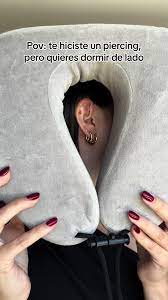
Although not specifically designed for piercings, U-shaped travel pillows can also be useful. These pillows elevate your head and leave space for the ear. Placing them in bed can help keep the pierced ear free of pressure. While not the most comfortable solution for everyone, it is an affordable option that some find useful.
Side Cushions
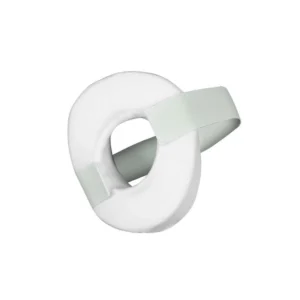
These cushions are designed for side sleepers who have difficulty resting their ear. They have an ergonomic design that slightly elevates the area where the head rests, reducing pressure on the ear and allowing for a more natural posture. They are thicker than traditional doughnut pillows, but provide additional support for the whole body.
3. Keep it clean and dry
One of the keys to avoiding infection and speeding up the healing of your piercing is to keep it clean. Before going to bed, be sure to wash your hands and carefully clean the pierced area with a saline solution or a product recommended by your piercer. Avoid using alcohol or hydrogen peroxide, which can dry out the skin and delay healing.
Keeping the piercing dry is also important. Excessive moisture can irritate the skin and lead to infection. If you sweat a lot at night, make sure your pillowcase is always clean and dry, as a damp or dirty pillowcase could worsen the healing process.

4. Choose the right jewellery
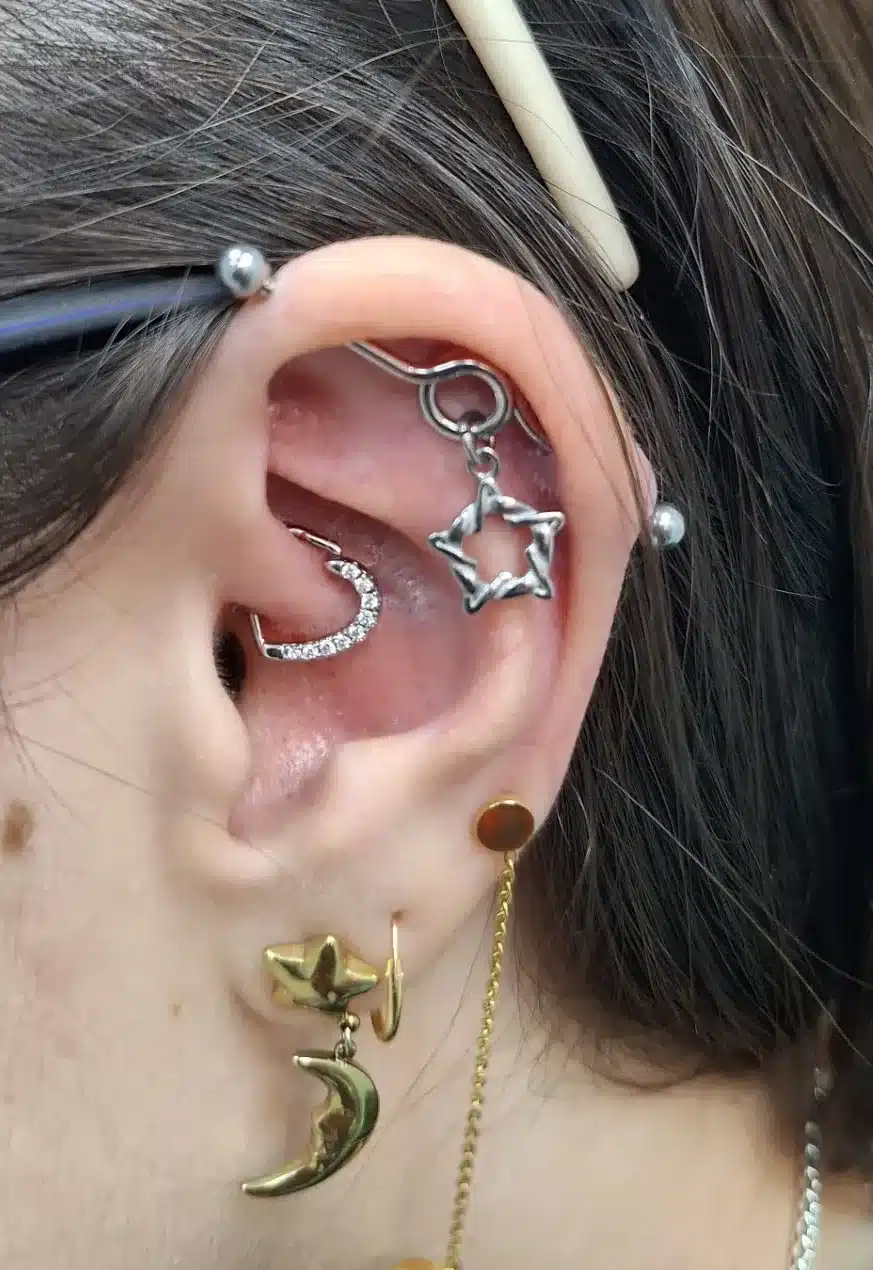
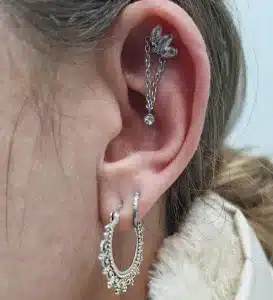
The type of jewellery you choose for your new piercing also affects your sleeping comfort. Avoid large, sharp-edged or protruding jewellery, as it can easily get caught on sheets or hair during the night, causing painful tugging.
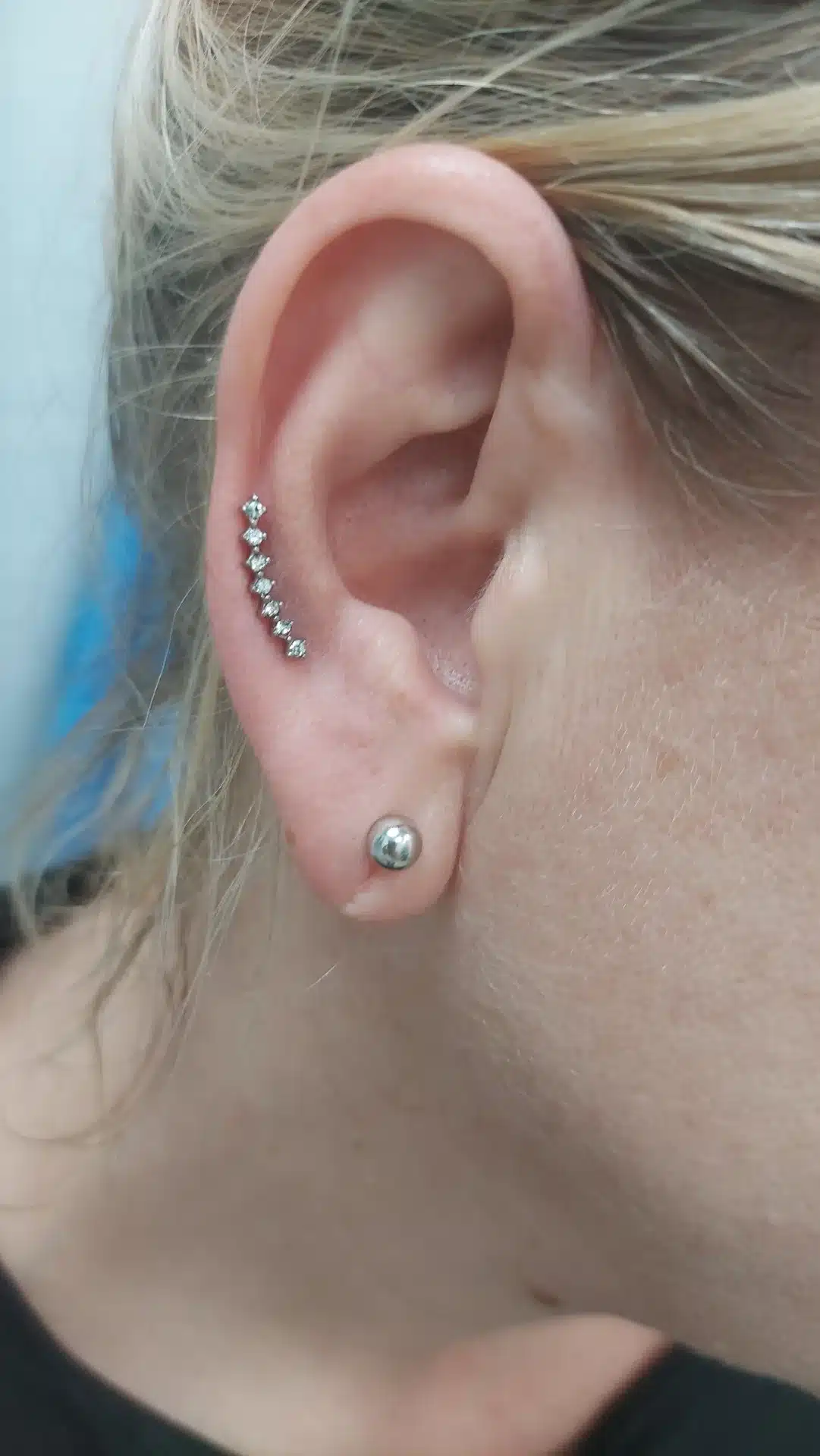
Opt for small, flat jewellery made of hypoallergenic materials, such as titanium or surgical steel, as they are less likely to cause allergic reactions or irritation. If you feel that the jewellery is uncomfortable or too tight, consult your piercer to adjust it or exchange it for a more suitable one.
5. Be patient and avoid touching the piercing
The key to a good rest and smooth healing is patience. Accept that your body needs time to adjust to the piercing and for it to heal completely. While it may be tempting to touch or adjust the jewellery, it is essential that you avoid doing so, especially with dirty hands, as you may introduce bacteria into the wound, causing an infection that will further delay the healing process.
If pain persists or you notice signs of infection, such as redness, severe swelling or discharge, do not hesitate to consult a health professional or your piercer.
Sleeping with a new ear piercing can be challenging at first, but by following these five tips you can minimise discomfort and enjoy a good night's rest while your piercing heals properly. Always remember to be patient, keep the area clean and choose the right tools to care for your new piercing. Over time, the pain will subside and you'll soon be enjoying your new piercing without nightly discomfort.
.