

How to Design Your Ear Project, Complete Guide
Ear piercings are a form of personal expression and aesthetics that has evolved in recent years. Designing a well-balanced ear project doesn't just involve choosing piercings at random, but requires careful planning to achieve harmony and a style that reflects your personality. Here are ten key aspects to consider when creating a balanced and attractive design.
10 Key Considerations
Consider the Shape of Your Ear
Each ear is unique in its anatomy, so what works for one person may not be ideal for another. Before deciding on the number and type of piercings, look at the structure of your ear and assess which areas are most suitable for piercing.

Determines the Number of Perforations
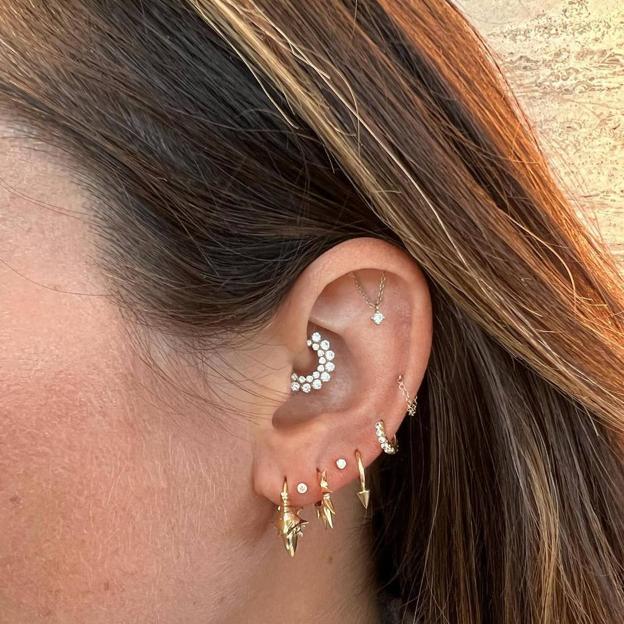
There is no fixed rule about how many piercings you should have. Some people prefer a minimalist design with one or two well-placed piercings, while others opt for a more complex composition with several piercings at different points on the ear. The important thing is that each piercing complements the others and creates a balanced aesthetic.
Harmony in Design
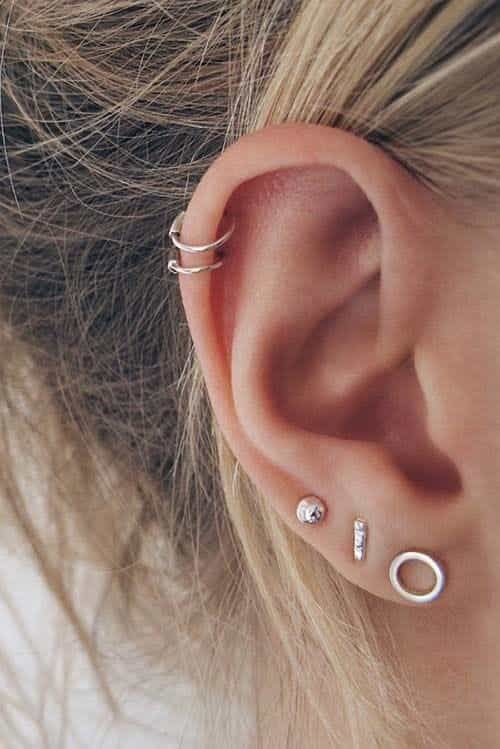
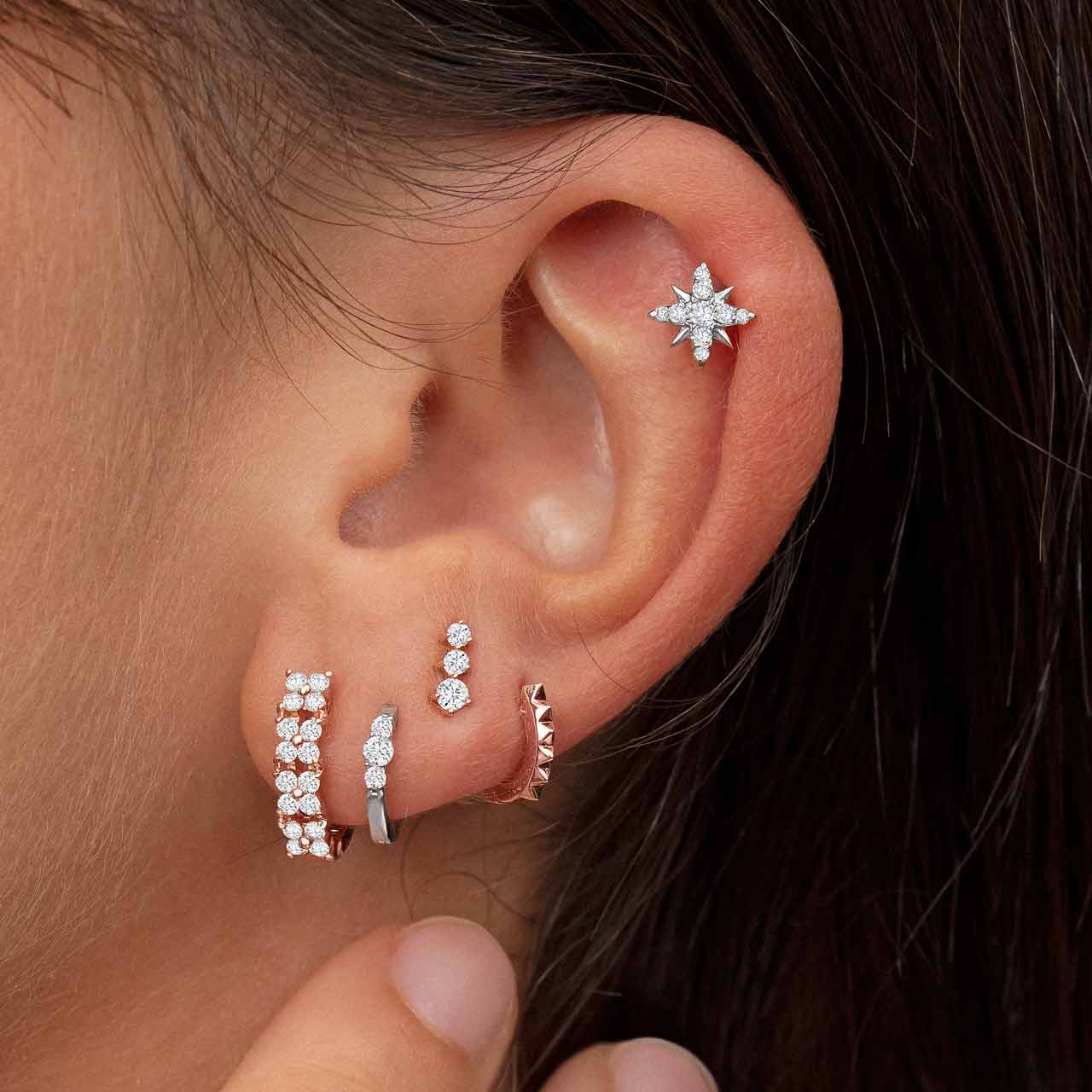
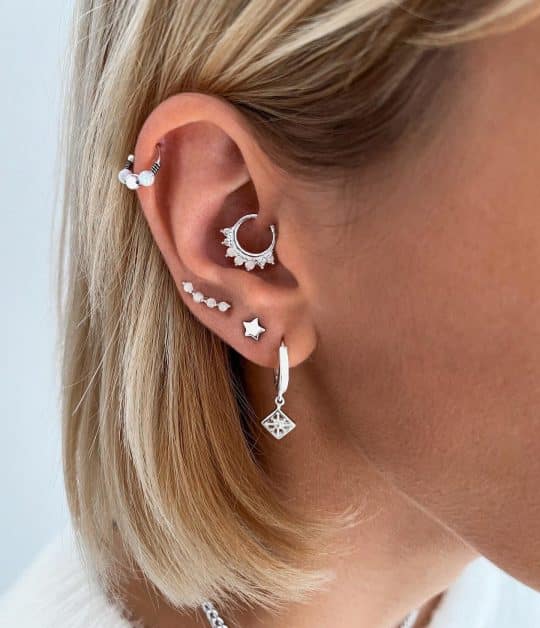
To achieve a harmonious distribution, it is advisable to combine different types of piercings. For example, a combination of lobe, helix and tragus can look more balanced than several piercings in one area. You can also play with asymmetry if you are looking for a bolder design.
How Many Perforations To Make In Each Ear?
Some people prefer a balanced design on both ears, while others choose to concentrate the most piercings in one ear. If you have one side of your face that shows more (because of hairstyles or photography habits), it may be a good idea to highlight that ear with more piercings.

Repeatable perforations
There are piercings that can be repeated in both ears without losing harmony, such as the earlobe or helix. However, there are others that might look better if kept on one ear only, such as the tragus or rook, as their prominent location can make the ear look overloaded if repeated on both sides.
Choice of Jewellery
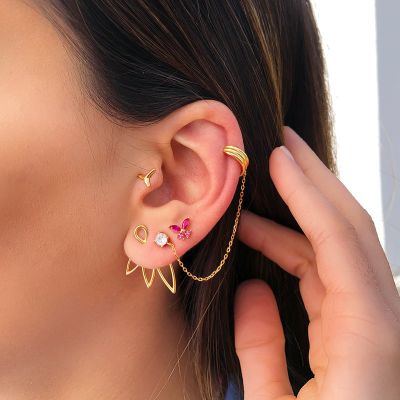
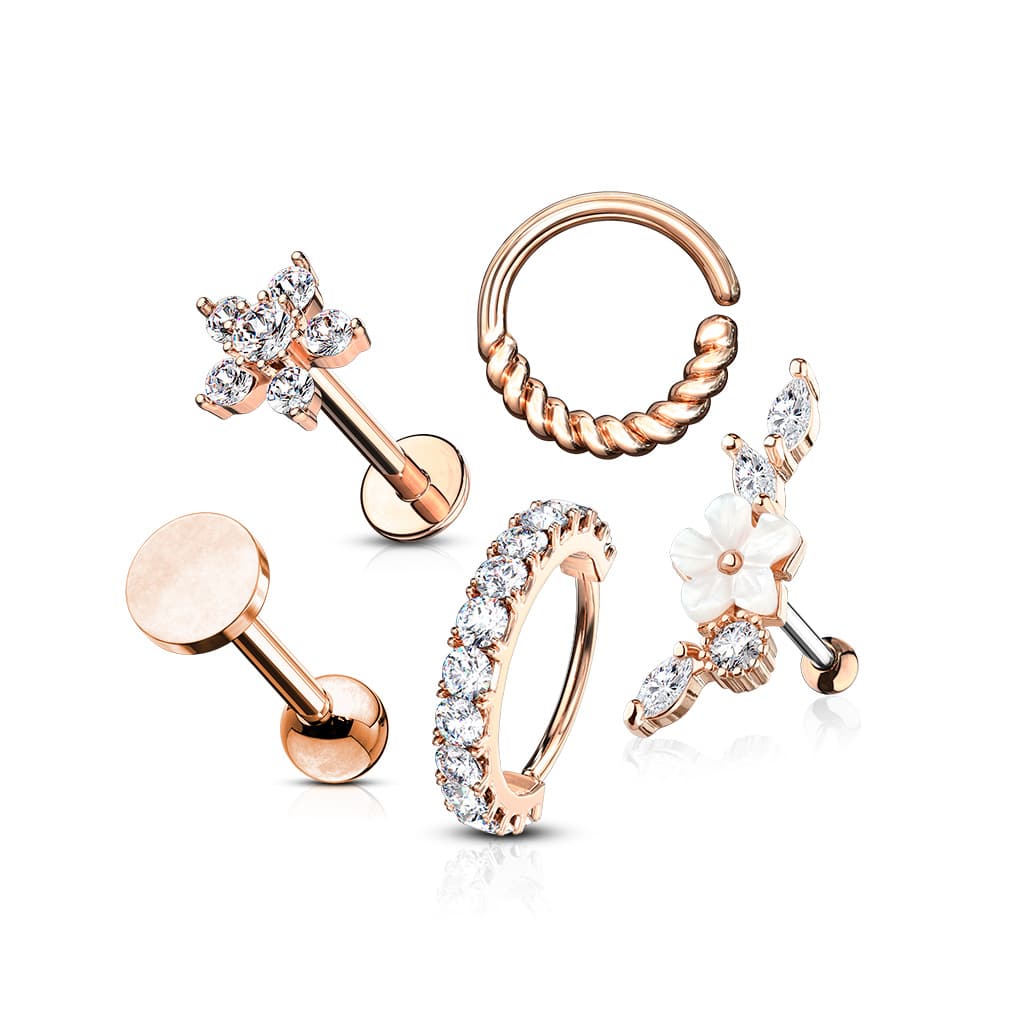
Once the piercings have healed, it's time to choose your final jewellery. The type of accessories you choose will greatly influence the overall aesthetic of your design. You can opt for minimalist pieces for a more understated look, or jewellery with bold designs for a bolder look. Also consider whether you prefer a uniform material (such as all gold or silver) or a combination of metallic tones.
Define Your Style
Your ear design should reflect your personal style. Some people go for an elegant, sophisticated look with small, delicate pieces, while others prefer a bolder design with large, unconventional shaped jewellery. Think about the message you want to convey and select your piercings and jewellery accordingly.
Jewellery Materials
Jewellery materials are essential to the health and appearance of your piercings. Opt for high quality materials such as titanium, surgical steel, 14k or 18k gold and niobium, as they are biocompatible and reduce the risk of allergic reactions or infections. Avoid low-quality jewellery that may cause irritation.
Healing Times and Care
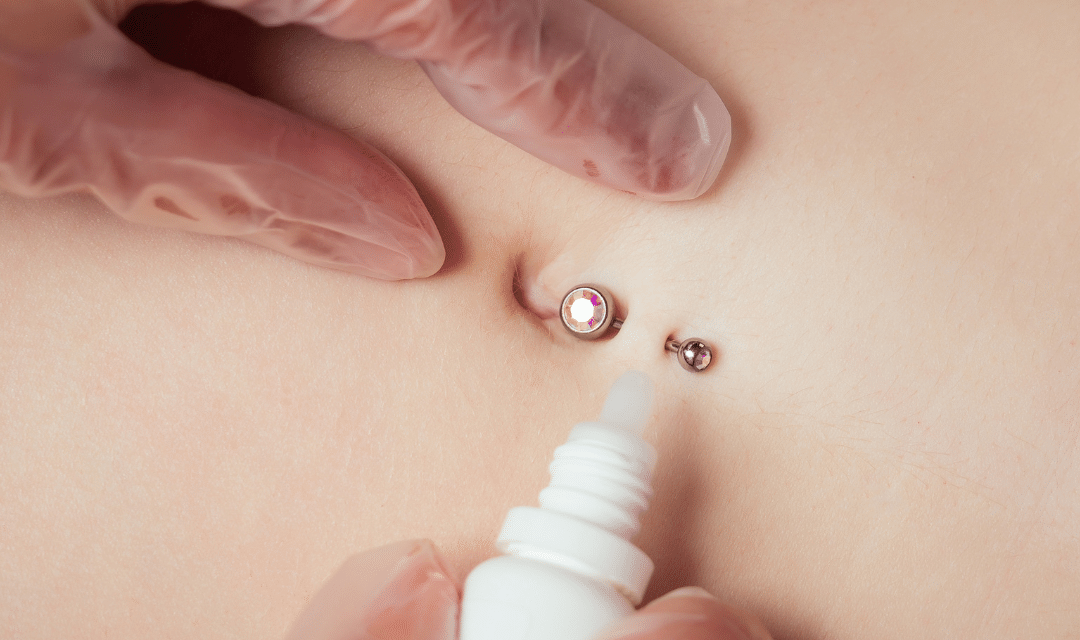
Each piercing has a different healing time. It is crucial to respect these times and follow proper care to avoid complications. Avoid changing jewellery too soon, clean piercings with saline and avoid touching or twisting earrings unnecessarily.
Professional Consultation
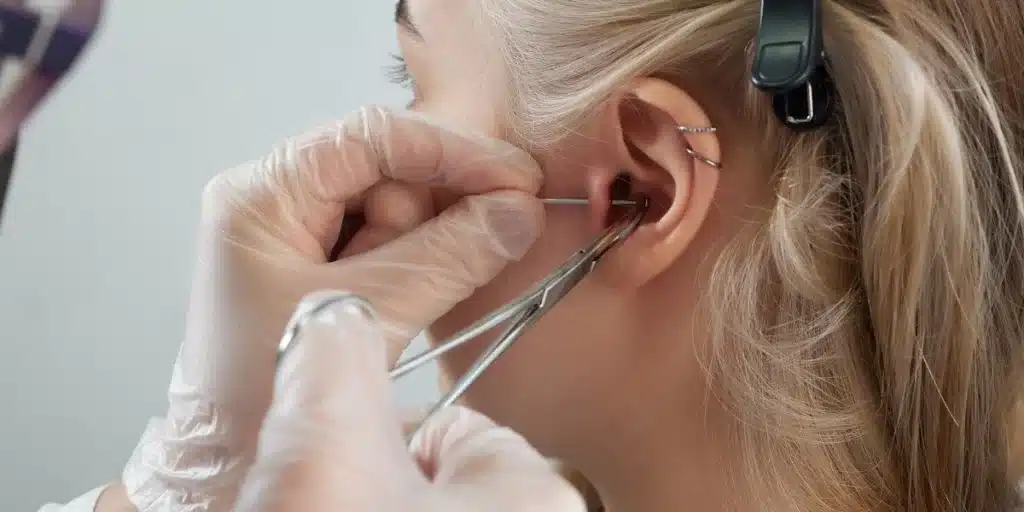
It is always advisable to visit an experienced piercer to assess the feasibility of your design. A professional will guide you in selecting the most suitable piercings for your ear and advise you on healing times, materials and jewellery combinations.
Conclusion
Designing an ear project requires planning and attention to detail. Considering the anatomy of your ear, the number and type of piercings, the harmony of the design, the choice of materials and jewellery is key to achieving an aesthetically appealing and healthy result. Take time to plan and always seek professional advice to ensure a safe and harmonious design.


1 thought on “Cómo Diseñar tu Proyecto de Oreja, Guia Completa”
All ears are perfect